Why Do Cats Lick Themselves But Never Smell?
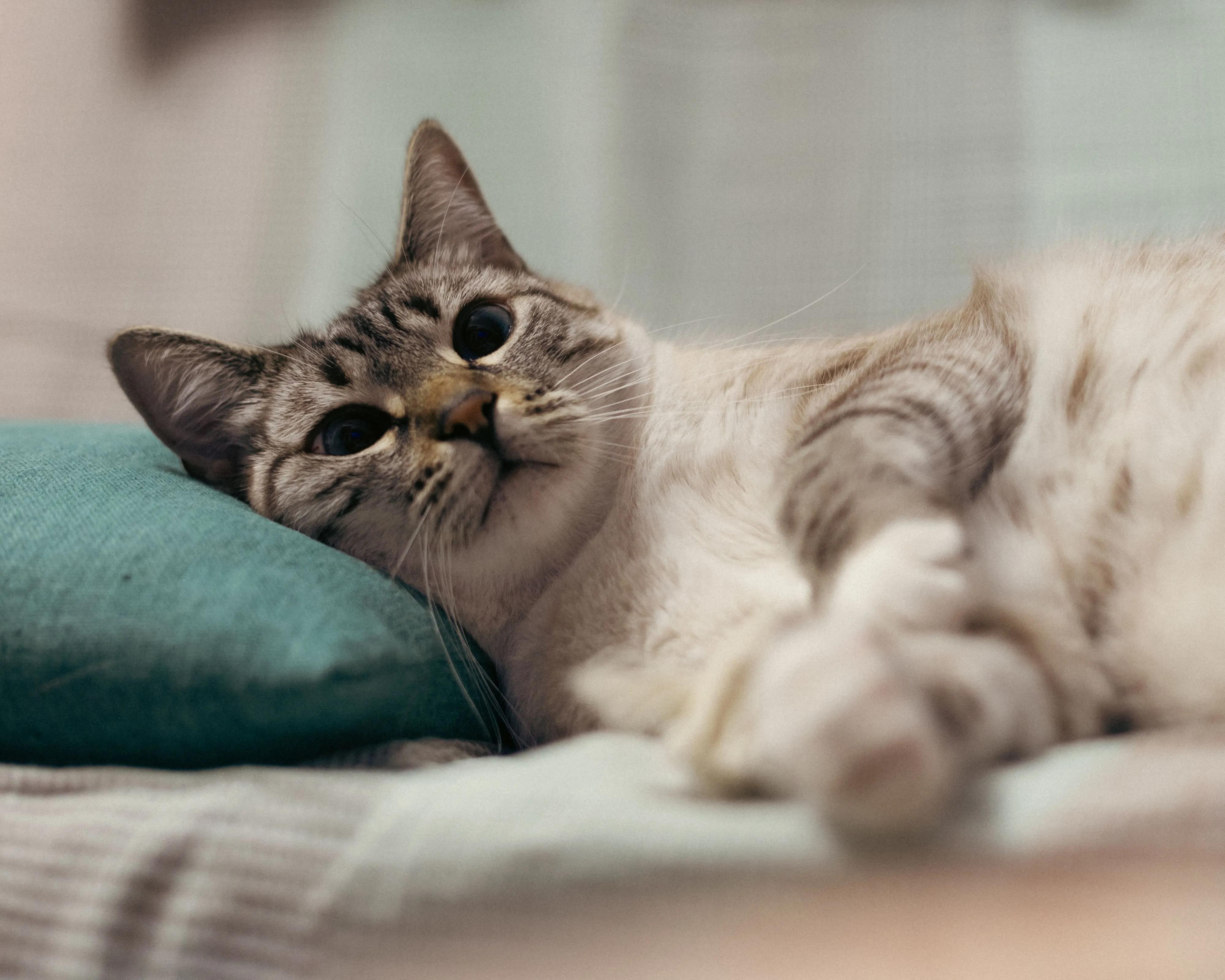
Be honest: you've buried your face in your cat's fur and taken a deep breath. It smells good. Not like soap, not like shampoo — just clean, warm, faintly sweet. Meanwhile your dog needs a bath every few weeks or it starts to smell like a wet rug.
Here's the weird part: your cat never bathes. It just licks itself. All day. With its own spit.
So how does a creature that cleans itself with saliva end up smelling better than one that gets regular baths? The short answer: your cat's tongue isn't a tongue. It's a precision self-cleaning tool — and "not smelling" is the whole point.
Let me show you the science. It's more interesting than you'd think.
Your cat's tongue is a self-cleaning engine
Start with the tongue itself, because it's doing way more than your tongue ever does.
In 2018, a team led by Georgia Tech bioengineer David Hu published a landmark study in the journal PNAS — the kind of paper that makes you look at your cat differently [1]. Using micro-CT scans of tongues from six cat species, they found something surprising: the tiny spines on a cat's tongue aren't simple barbs. They're hollow, scoop-shaped structures that bend backward toward the throat [1]. The researchers called them "cavo papillae."
Why does the shape matter? Because it changes how saliva moves. A hollow scoop uses surface tension to hold and wick liquid — like a tiny straw. The researchers calculated that each papilla holds about 4.1 microliters of saliva per lick, and a domestic cat moves roughly 48 milliliters of saliva into its fur every day [1]. That's about a fifth of a cup — of spit — being spread across the coat, every single day.
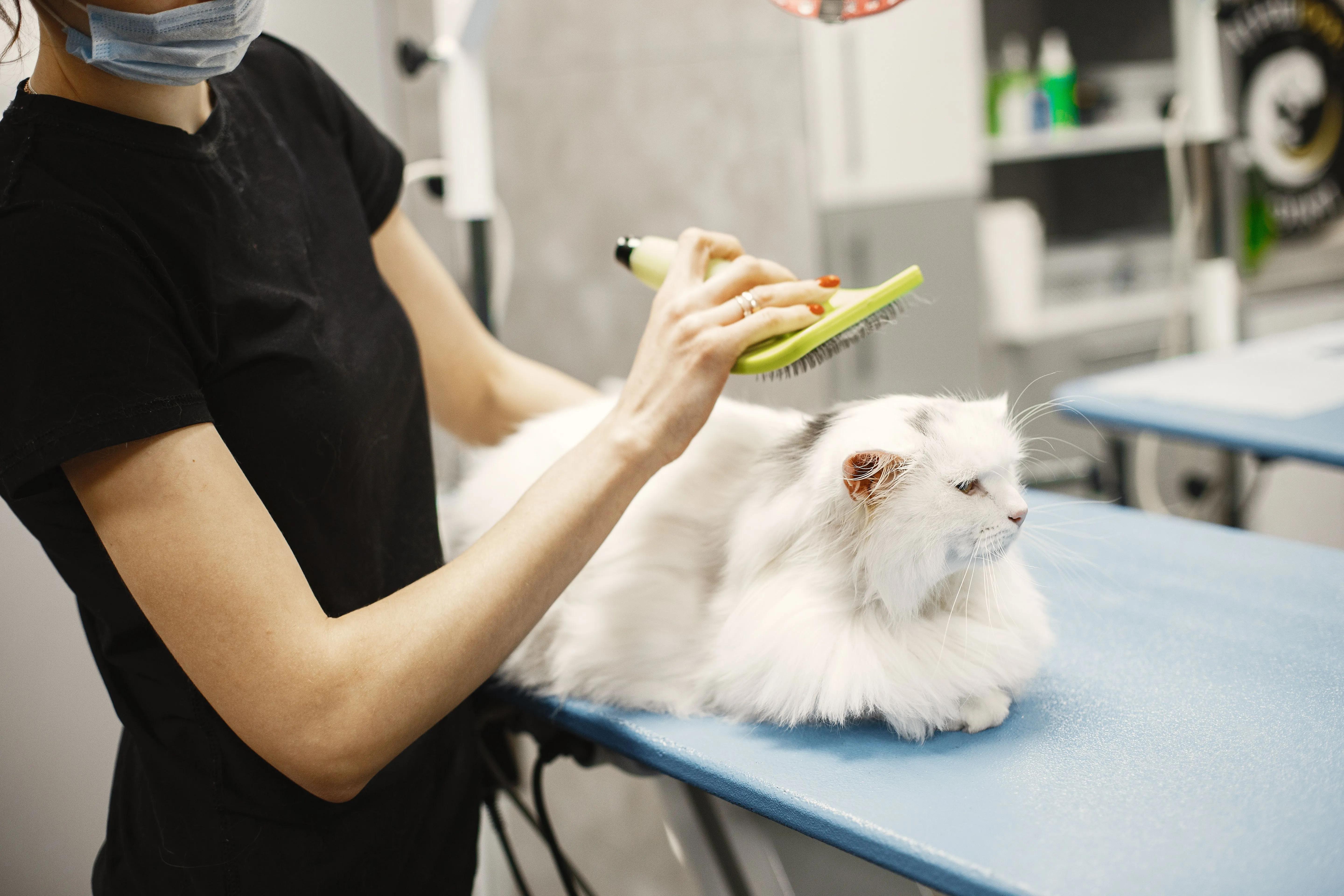
That's the mechanism. Your cat isn't just "licking." It's actively transferring its own saliva deep into the fur, down to the skin. And those curved spines also rotate when they hit a tangle, letting the tongue work like a comb that can actually undo knots [1].
A cat spends about 30-50% of its waking hours grooming [2]. At those volumes, that's a lot of saliva working its way through the coat on a regular schedule.
Why doesn't the saliva make your cat smell?
Here's where it gets counterintuitive. If your cat is smearing its own spit all over itself all day, why doesn't it smell like saliva? Why does it smell... good?
The answer is that saliva on a cat isn't doing what saliva does in your mouth. On the fur, the spit is doing a job. The tongue's tiny barbs physically scrape away oils and dirt before they can pile up and start to smell, and cat saliva seems to carry mild antimicrobial properties that help keep odor-causing bacteria in check. Regular grooming keeps removing those odor sources before they ever accumulate [4].
So you end up with a coat that stays clean and mostly odorless — even though the cleaning agent is "used" saliva. Some owners describe a faint, pleasant, slightly sweet smell on a clean coat [4]. It's not perfume. It's a system working correctly.
Compare that to a dog. Dogs have a stronger natural body odor to begin with, and they don't groom themselves anywhere near as much. So the difference isn't that cats have "better" saliva — it's that cats run a constant, self-renewing cleaning cycle that keeps odor-causing buildup from ever happening.
The cooling trick nobody talks about
There's a second reason your cat licks itself so much, and it has nothing to do with smell: temperature.
Cats don't sweat like we do. They have a few sweat glands, mostly on their paw pads, but that's nowhere near enough to cool a body the size of a small predator. Instead, they use evaporation — and the saliva they spread during grooming does the job [5].
When that saliva evaporates off the fur, it pulls heat away from the skin, the same way sweat cools you. The PNAS researchers found that the temperature difference between a cat's skin and the outer layer of its fur can reach about 30°F (roughly 16.7°C) [1]. That's a serious cooling gradient, driven in large part by that thin film of evaporating saliva.
So when it's hot, your cat grooms more — not because it's vain, but because it's trying to cool down. A cat that licks its fur in the summer isn't being fussy. It's running its own air conditioner.
Why being odorless is a survival strategy
Here's the deeper reason, and it's the one that ties everything together: for a cat, not smelling is a survival tactic.
Think about what a cat is. A solitary ambush predator. In the wild, it survives by sneaking up on prey and by avoiding larger predators that might see it as a meal. A strong smell would blow both of those.
Grooming removes the scent markers — the food residue, the old skin oils, the debris from the environment — that would otherwise accumulate on the coat and give a cat away [6]. A clean cat is an invisible cat. That's why grooming is so deeply wired into them: it's not vanity, it's evolution.
It also explains something else. Cats have scent glands on their face and paws, and they spread their own familiar pheromones onto themselves when they groom [4]. So there's a balance — they don't smell like "random stuff from the world," they smell like cat. Their own reassuring scent. That's part of why that fur smells the way it does: it's your cat's signature, freshly applied.
When "clean" becomes a warning sign
Now, before you go feeling too smug about your miracle self-cleaning cat, there's a catch. That grooming system is so powerful that when it goes wrong, it's a red flag.
Cats that groom too much — to the point of licking fur off — are telling you something. Cornell's Feline Health Center notes that while 30-50% of waking time grooming is normal, excessive licking or licking to the point of hair loss is not [2]. Vets even have a nickname for these cats: "fur mowers" [2].
Excessive grooming usually falls into two buckets [2]:
- Physical: itchiness (fleas, allergies), or pain (it hurts somewhere, so they lick it)
- Psychological: stress or anxiety (a move, a new pet, a lost companion, a schedule change)
Where the cat licks can hint at the cause — tail base often means fleas, while back and belly can point to allergies — but there's a lot of overlap, and only a vet can sort it out [2].
The rule of thumb: if your cat is licking enough to cause bald patches, hairballs from over-grooming, or visible skin damage, that's a "talk to a vet" moment, not a "buy more grooming tools" moment [2]. The vet will rule out physical causes first; if it's stress-related, the fix usually involves gradual changes, familiar items, vertical space, and daily interactive play — not a pill you reach for on your own [2].
The good news: this isn't common. For most cats, the self-cleaning system hums along quietly, keeping them clean, cool, and smelling like home.
The takeaway
Here's the one-line version: your cat doesn't smell because it's running a silent, all-day, self-cleaning system — and that system exists because a smelly cat wouldn't survive.
The hollow spines of a cat's tongue wick 48 milliliters of saliva into the fur every day [1]. That saliva, plus the tongue's physical scraping, keeps odor-causing buildup from ever starting [3]. It evaporates to cool the cat [5]. And it leaves behind that faint, clean smell you like so much [4]. Behind all of it is an evolutionary logic: a predator that doesn't smell is a predator that catches food and avoids being caught [6].
So next time you bury your face in that warm, clean fur, you're not just enjoying your cat. You're getting a whiff of millions of years of evolution, working perfectly.
And if your cat ever does start smelling off, or starts grooming until it's bald — that's not the system failing for no reason. It's a signal. Listen to it.
Furpick.app is a participant in the Amazon Services LLC Associates Program and other affiliate programs. We may earn from qualifying purchases. Content from Amazon and other retailers is provided 'as is' and subject to change. All trademarks are the property of their respective owners.