Is an Automatic Litter Box Worth It? A Buyer's Checklist
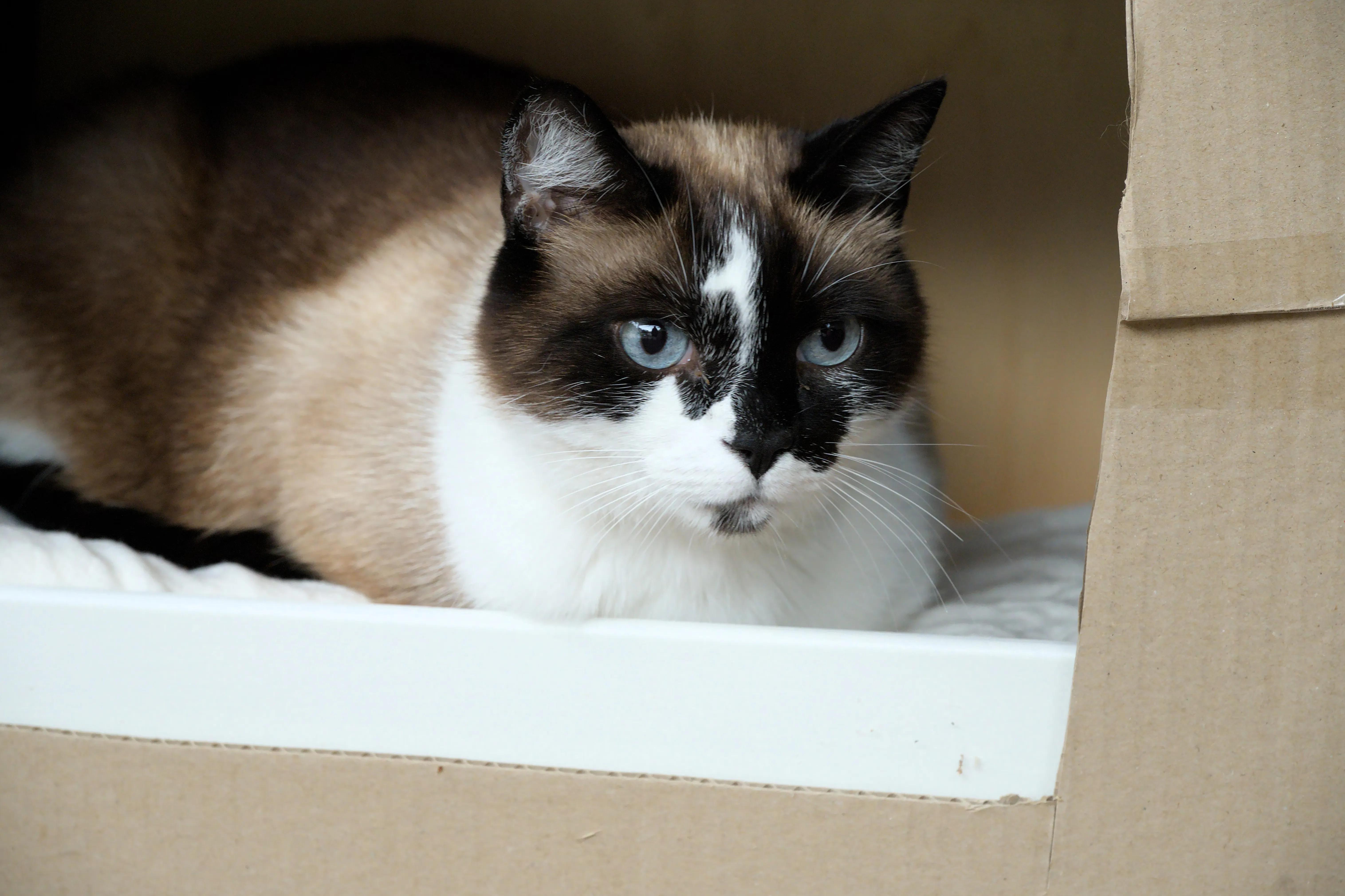
There's a $700 piece of plastic in a lot of living rooms right now, and it's the reason this article exists: an automatic litter box that nobody — the human or the cat — is happy with. The human spent a fortune to stop scooping. The cat, confronted with a machine that suddenly starts turning and whirring under its paws, decided the floor was safer and started going there instead.
I've watched this exact story play out more than once. It's not a broken product. It's a mismatch between what the machine can do and what the human actually needed — plus a cat nobody asked first.
Automatic litter boxes are one of the fastest-growing pet purchases in North America right now — search interest is up more than 20% over the past year, and the category is projected to keep growing at a steady clip through the decade [2]. There's a reason for that: they genuinely save time. More and more owners are deciding the daily scoop isn't worth their mornings.
But here's the part the marketing doesn't put on the box: these are high-price, high-decision buys with a real risk of ending up as a very expensive paperweight. They range from around $160 to over $700. They lock you into ongoing costs. And they depend entirely on one thing you can't buy: whether your cat will accept a machine where it does its business.
So the question isn't "are they good?" Some of them are genuinely great. The honest question is "is one right for your household — and if so, what should you check before you spend?" This is that checklist.
Does your household actually need an automatic litter box?
Let's start with the uncomfortable question most reviews skip: whether you need one at all.
Cats are in a lot of American homes — about 53 million households owned one, per the American Pet Products Association's 2026 report [3]. Most of those owners scoop by hand, and most are fine. An automatic box isn't a requirement; it's a convenience you pay for.
So ask yourself what the machine is actually solving. Automatic litter boxes earn their keep in a few specific situations:
- You're away a lot. Long workdays, frequent travel, overnight trips. A machine that cleans after each use keeps the box usable and the smell down when no one's home to scoop. This is the strongest case for buying one [4].
- You have multiple cats. More cats means more waste and more odor buildup between cleanings. A box rated for multiple cats that cycles often genuinely helps [4].
- You have limited mobility. Bending and scooping every day is real physical work. For older owners or anyone with back or joint trouble, automation removes a daily chore [4].
But if you're a single-cat household where someone's home most days and scooping once a day isn't a burden — you may be solving a problem you don't have. An automatic box is a luxury there, not a fix. Spend the money only if the daily scoop actually feels like a cost to you.
There's also a quieter scenario worth naming: the box that's bought to solve a person's guilt or a person's image of being a great cat parent, not an actual chore. I've seen owners buy an automatic box because they felt bad about not scooping enough — and then feel worse when the cat won't use it. If the real problem is that you're not scooping often enough, a bigger standard box, better litter, and a 30-second daily habit fixes that for a fraction of the price. Don't let a $500 gadget paper over a habit you could change for free.
And before you get too deep into the decision, consider your cat's medical picture. Some conditions — like a cat on a prescription diet that needs you to monitor exactly how much it eats and pees — are easier to manage with a standard box you're cleaning yourself. An automatic box hides the details inside a drawer. If your vet is tracking your cat's output for a health issue, ask whether a machine that bundles it up is a good idea before you switch [4].
What's the difference between the main types?
If you decide you want one, the first thing to understand is that "automatic litter box" covers three very different machines [5]:
- Rotating globe (drum) units. The box is a barrel that turns over, sifting clean litter from clumps into a waste drawer. This is the premium category — the most popular automatic boxes work this way. They're usually the best for multiple cats and large cats, and they use standard clumping litter. The trade-off: they're the most expensive, and they're big [1][5].
- Mechanical rake units. A rake sweeps across the litter after use, pushing waste into a covered tray. These tend to cost less. The catch: many of the budget models lock you into their own proprietary crystal-litter trays, which you keep rebuying, and some have no sensor to stop the cycle if a cat jumps back in [1][5].
- Washing units. A small number of models hook up to plumbing and literally wash and dry the litter granules. These free you from buying litter at all, but they need to sit near water and drain, which rules them out for many homes [1].
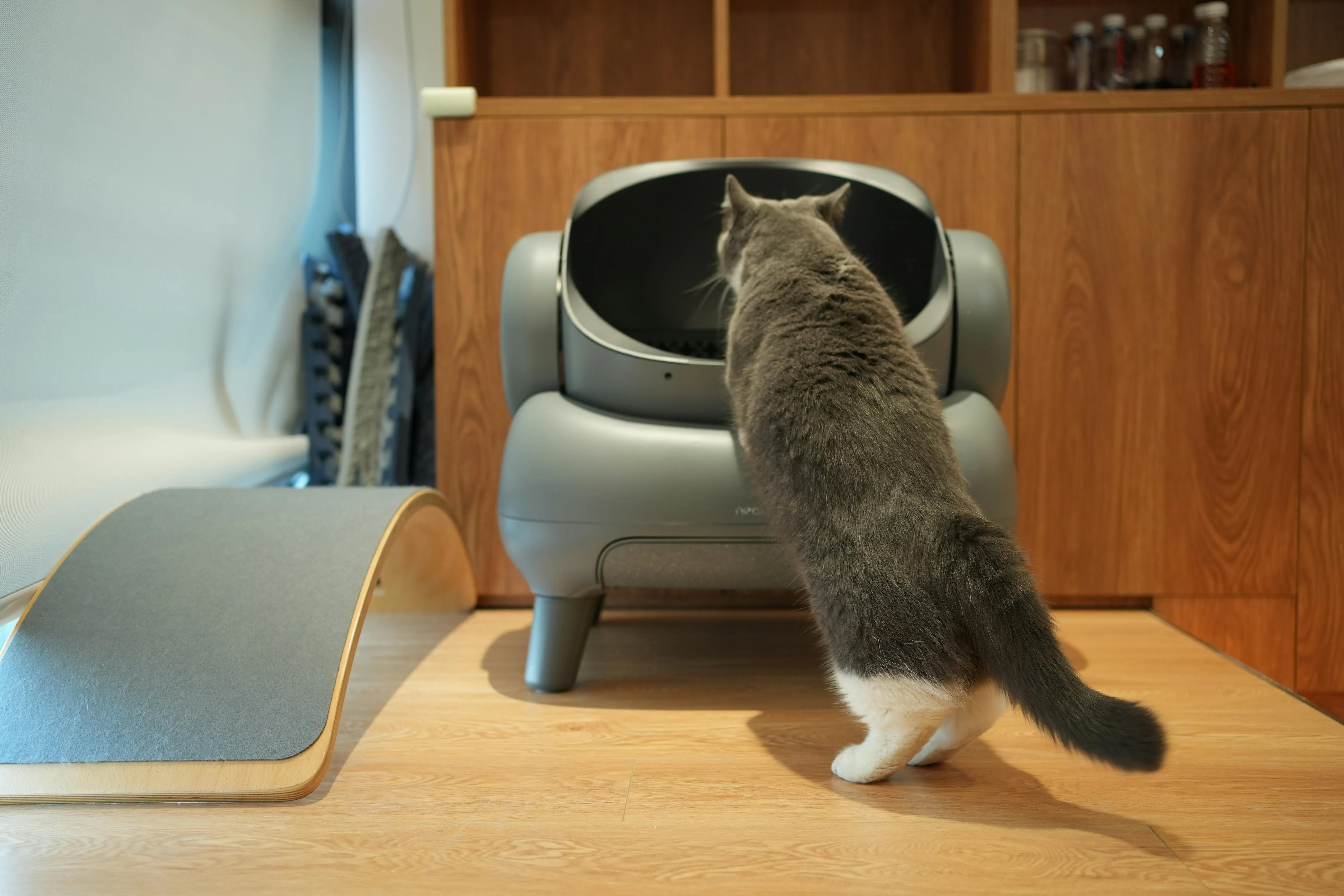
The reason this matters: "automatic litter box" is not one product. The $160 version and the $700 version solve the problem very differently. Before you compare brand names, figure out which type fits your cats, your space, and your willingness to buy replacement litter or trays.
Here's the practical way to think about it. If you have a large cat or more than one cat, a rotating globe unit is usually the only type that's big enough and strong enough to keep up — but that's also the type that costs the most and takes up the most floor space. If you want to spend less, a rake unit can work, but you'll want to check two things carefully: whether it locks you into expensive proprietary trays, and whether it has a sensor that stops the cycle if the cat jumps back in (some budget rakes are on a timer and don't check) [1][5].
The washing units are a niche but a real one: if you have plumbing nearby and hate buying litter entirely, they're the only type that eliminates the litter refill altogether. The catch is installation and that they can't go just anywhere.
So before you even look at brand reviews, answer three quick questions: how many cats and how big are they, how much space and outlet access do you have, and are you okay rebuying a proprietary consumable every month or would you rather pay for standard litter? Your answers narrow the field more than any "best of" list will.
What should you never compromise on?
Whatever type you choose, a few things are non-negotiable — and they're the ones that separate a sensible buy from a regret.
- A reliable cat-detection sensor. The single most important feature is a sensor that reliably detects a cat in or near the box and pauses the cleaning cycle the moment one steps in. A cheap or unreliable sensor is a safety risk: a box that cycles while a curious cat is inside is how cats get scared off — or worse, caught. This is the one place you should not save money [1][5].
- The right size and weight limit. Automatic boxes are generally bigger than a standard box and need clearance above (for the cat to enter) and behind (to pull out the waste drawer), plus a nearby outlet. Measure the spot before you buy — a machine that doesn't fit where you planned is a machine that ends up shoved in a closet. More important, check the weight limit against your cat. Big cats — 15+ pounds, and especially 18 to 25 pounds — can be too heavy for some units. The weight limit isn't a suggestion; it's often the difference between a box that cycles smoothly and one that stalls mid-turn with a heavy cat inside. A heavy cat crammed into an undersized box is a cat that starts finding other places to go [1].
- A multi-cat rating that matches your home. Boxes are rated for a certain number of cats, and that rating is about more than marketing — it reflects how much waste the drawer can hold and how often the machine realistically needs to cycle. Push past that rating and the waste drawer fills too fast, the machine cycles constantly, and odor control collapses. If you have three cats, don't buy a box rated for two and hope it keeps up [1]. Add a cat, and you may need to either size up or be prepared to empty the drawer more often.
On sensors specifically, don't just trust the spec sheet — look for how the manufacturer describes the safety mechanism, and read what real owners say about whether it actually works. A sensor that's described in vague terms ("smart detection") deserves more scrutiny than one that's explained plainly. This is the feature you'll never notice when it works, and the one you'll regret deeply the one time it doesn't.
What does it really cost over time?
The sticker price is only half the story, and this is where a lot of buyers get blindsided. Let me break down the real, ongoing costs [1][4]:
The machine itself runs from about $160 for a basic single-cat rake unit up to $700+ for a premium multi-cat rotating globe. That's the obvious number.
Replacement litter or trays. Some units use standard clumping litter — cheap and easy. Others lock you into proprietary trays or granules you keep rebuying. Those crystal-litter trays can run $15-20 each and need replacing roughly monthly. That's a real, repeating cost that can outpace the machine's price difference over a couple of years [1].
Waste drawer bags and carbon filters. Every automatic box uses disposable waste-drawer liners and, often, carbon filters for odor control. These are small but steady ongoing purchases.
Maintenance time. Here's the part nobody mentions in the ads: an automatic box isn't "set and forget." You still need to empty the waste drawer every few days, top up the litter, wipe down the sensor, and do a full deep-clean every few weeks. The drum or rake track, the parts that touch waste most, need regular scrubbing [4]. It's less work than daily scooping — but it's not zero work.
Let me give you a rough way to think about the total, because the math changes the decision. Say a premium rotating-globe machine runs you about $650 and uses ordinary clumping litter — say $20 a month in litter plus small drawer-bag and filter costs. Over two years, you're looking at roughly $1,100 all-in. Now take a cheaper rake machine at $300 that locks you into proprietary crystal trays at about $18 a month. Over two years, that's $300 for the machine plus over $430 in trays — roughly $750, creeping toward the same territory, with a machine that's less capable and a litter you can't switch. The sticker price tells you less than the locked-in monthly cost does.
This is why I'd rather spend on a machine that uses ordinary, easily available clumping litter than save a few hundred up front on one that traps you in proprietary refills. Standard litter is a market you can always buy from; a proprietary tray is a subscription you didn't ask for [1].
And budget for the maintenance honestly. Set a reminder to deep-clean every few weeks — most manufacturers recommend a regular full breakdown and scrub, and skipping it is the fastest way to a machine that smells and a sensor that stops reading correctly [4]. Add that time to your mental cost, too.
Will your cat actually use it?
This is the question that decides everything, and it's the one most buyers never ask before they spend. The uncomfortable truth: a meaningful number of cats refuse automatic litter boxes, and when they do, you end up with an expensive machine and a cat that's gone to the carpet instead.
Why do cats refuse? Not out of stubbornness — out of instinct. A cat needs its litter box to feel safe. An automatic box is a strange object that, at random moments, starts moving and making noise while the cat is in its most vulnerable position. If you plug it in and let it run the first day, you're asking most cats to accept a new box, a new motion, and a new sound all at once. For a sensitive or anxious cat, that's too much, and it will simply go elsewhere [4].
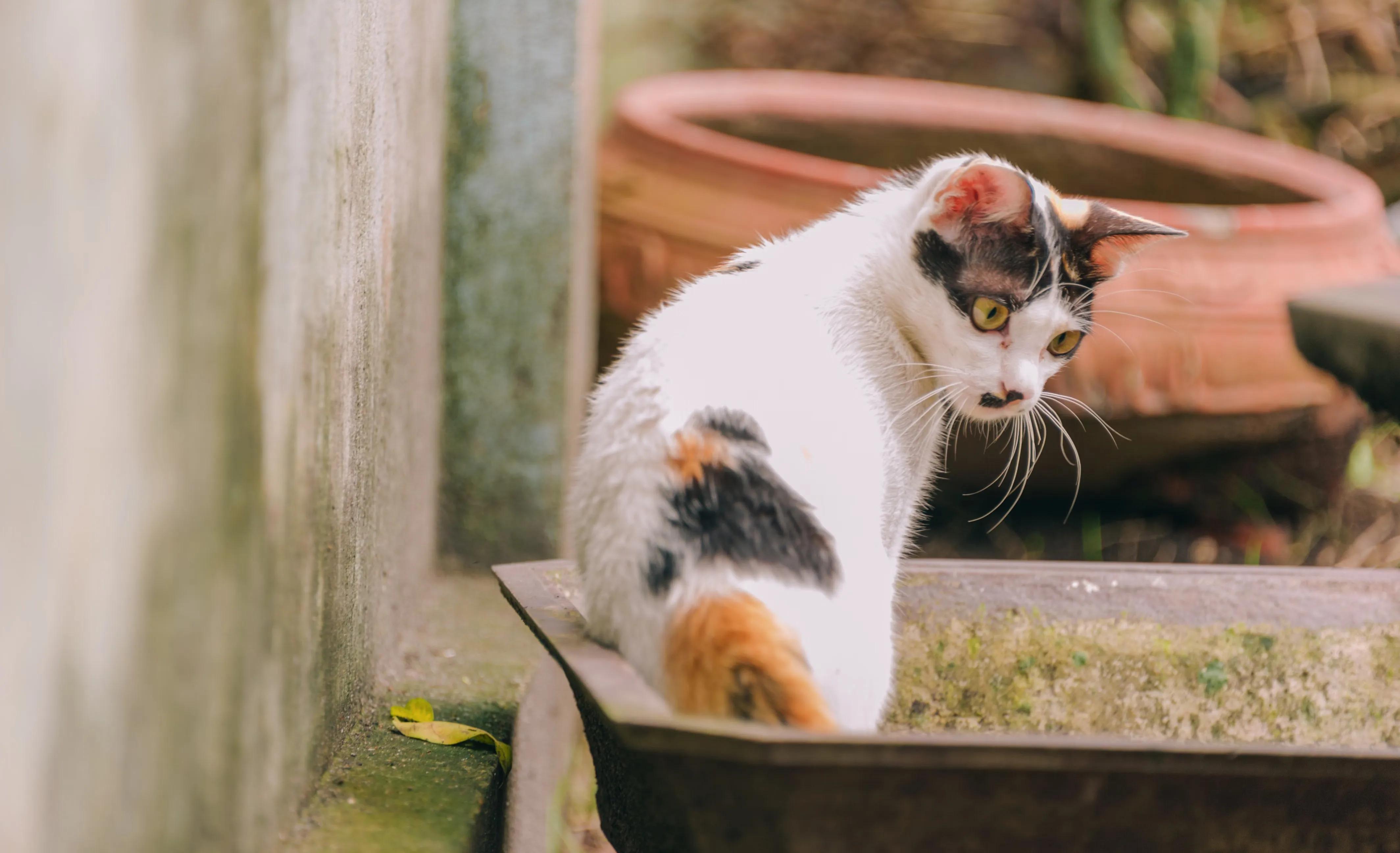
The fix is a slow transition, and the behavioral guidance is consistent across vet and animal-welfare sources: don't rush it. The protocol that works looks roughly like this [4]. I've watched friends skip all of it — plug the box in, set it cycling, hope for the best — and then wonder why the cat went back to the old one. It's not stubbornness. It's speed:
- Leave it off first. Set up the new box unplugged, right next to the old one. Let your cat use it as a plain box until it's a boring, familiar object.
- Run one cycle while the cat is out of the room. Don't let the cat be near it the first time it moves.
- Remove the old box last. Only after your cat has consistently chosen the new box for days. Keep the old one as a backup throughout.
- Keep the litter the same. Use the same unscented clumping litter your cat already trusts. You can even scoop a little used litter into the new box so it smells familiar.
- Don't rush the schedule. Some cats take a week or more. The slowest cat in a multi-cat home sets the pace.
It's also worth knowing which cats are the riskiest candidates, so you can go in with eyes open. My own cat is the type who startles at the ice maker — I knew before I ever considered a machine that she'd never accept one. If you've got one of those cats, the honest move might be skipping the experiment entirely. Kittens under a few pounds shouldn't be left alone with an active cleaning cycle. Very anxious or noise-sensitive cats — the ones that startle at a vacuum or a door slam — are the most likely to reject a machine that moves and hums. And a cat that already has a strong, deep-seated dislike of its litter box is probably not the one to introduce a $500 experiment to [4]. None of these mean "don't try" — they mean "go slow, keep the backup box, and be ready to accept that it may not take."
And here's a critical rule that's really about your cat's health, not the machine: if your cat suddenly avoids the box, strains to pee, or pees outside it, that's a medical red flag first — not a training problem. Sudden litter-box avoidance can signal urinary trouble, which cats hide well. Rule out a health issue with your vet before you blame the box [4]. A machine is never worth your cat's health. If a cat that used to be fine with the box suddenly starts avoiding it weeks into using the automatic one, don't assume it's "the machine being scary" — get it checked. Timing and suddenness are clues a vet can read that no troubleshooting guide can.
What problems do owners actually run into?
Even with the right box and a smooth transition, automatic boxes aren't problem-free. Knowing the common failure points saves you a repair call or a return. Owners consistently report a few [4]:
- Odor isn't magically gone. An automatic box controls odor far better than a manual one — but only if the waste drawer is emptied regularly (every couple of days for a single cat), the carbon filter is changed, and the box is deep-cleaned. Skip those and you're right back to smell [4].
- Sensors can misfire. Weight sensors can misread a cat as present (or absent) if the machine is on an uneven floor. Dust can block motion sensors. A box that won't cycle, or cycles when it shouldn't, is usually a sensor issue you can fix by leveling the unit and wiping the sensors [4].
- Noise surprises some cats — and some humans. The cleaning cycle makes a motor sound. Sensitive cats may flinch; light sleepers may wake. Place it away from bedrooms, and if the model allows, schedule cleanings for when no one's sleeping [4].
- "Cheap" can mean locked-in costs. The lowest-price units often require proprietary trays. If you hate the tray cost later, you've bought a machine with expensive habits.
None of these are reasons not to buy. They're reasons to buy informed — and to have realistic expectations about what an automatic box does and doesn't do.
A good way to protect yourself: keep the receipt and check the return policy before you order. Many automatic boxes have a trial window — some give you weeks or even months to decide if it works for your cat. Use that window honestly. If your cat hasn't accepted the machine after a fair, patient transition, returning it isn't failure; it's the system working the way it's supposed to. Better to lose the shipping cost than to live with a $700 object your cat uses as a reason to pee on the rug.
One more thing on maintenance, since it's the most underrated part of ownership: an automatic box that isn't maintained isn't just less convenient — it can actually become less safe. A sensor caked in dust, a drawer left too long, a filter past its date — these don't fail loudly. They fail quietly, the same way the box's whole value proposition does. The people who love their automatic boxes are almost always the people who treat them like the appliance they are: worth a few minutes of weekly attention, not a "set it and forget it" purchase.
The takeaway
So is an automatic litter box worth it? It depends — honestly, more on you than on the product.
An automatic box earns its cost when it solves a real problem: you're away a lot, you have multiple cats, or scooping is genuinely hard for you. In those cases, the time and hassle it saves is worth the price. It's not worth it when it's solving a problem you don't have, when you haven't budgeted for the consumables and maintenance, or when your cat is a nervous type who may never accept it.
The honest version of this decision: ask if you need it, then ask if your cat will use it — in that order. If both answers are yes, spend on the features that matter most: a reliable cat-detection sensor, the right size for your cat, a multi-cat rating that fits, and a machine that doesn't lock you into expensive refills.
Scooping by hand every day isn't a failure. Plenty of cats are perfectly happy with a clean, ordinary box. The goal of an automatic box isn't to impress anyone — it's to genuinely remove a chore without giving your cat a reason to find a corner. Get that right, and the $700 stops looking like a splurge and starts looking like a fair trade for your mornings.
Furpick.app is a participant in the Amazon Services LLC Associates Program and other affiliate programs. We may earn from qualifying purchases. Content from Amazon and other retailers is provided 'as is' and subject to change. All trademarks are the property of their respective owners.