Why Your Cat Needs Dental Care (and How to Brush Without a Fight)
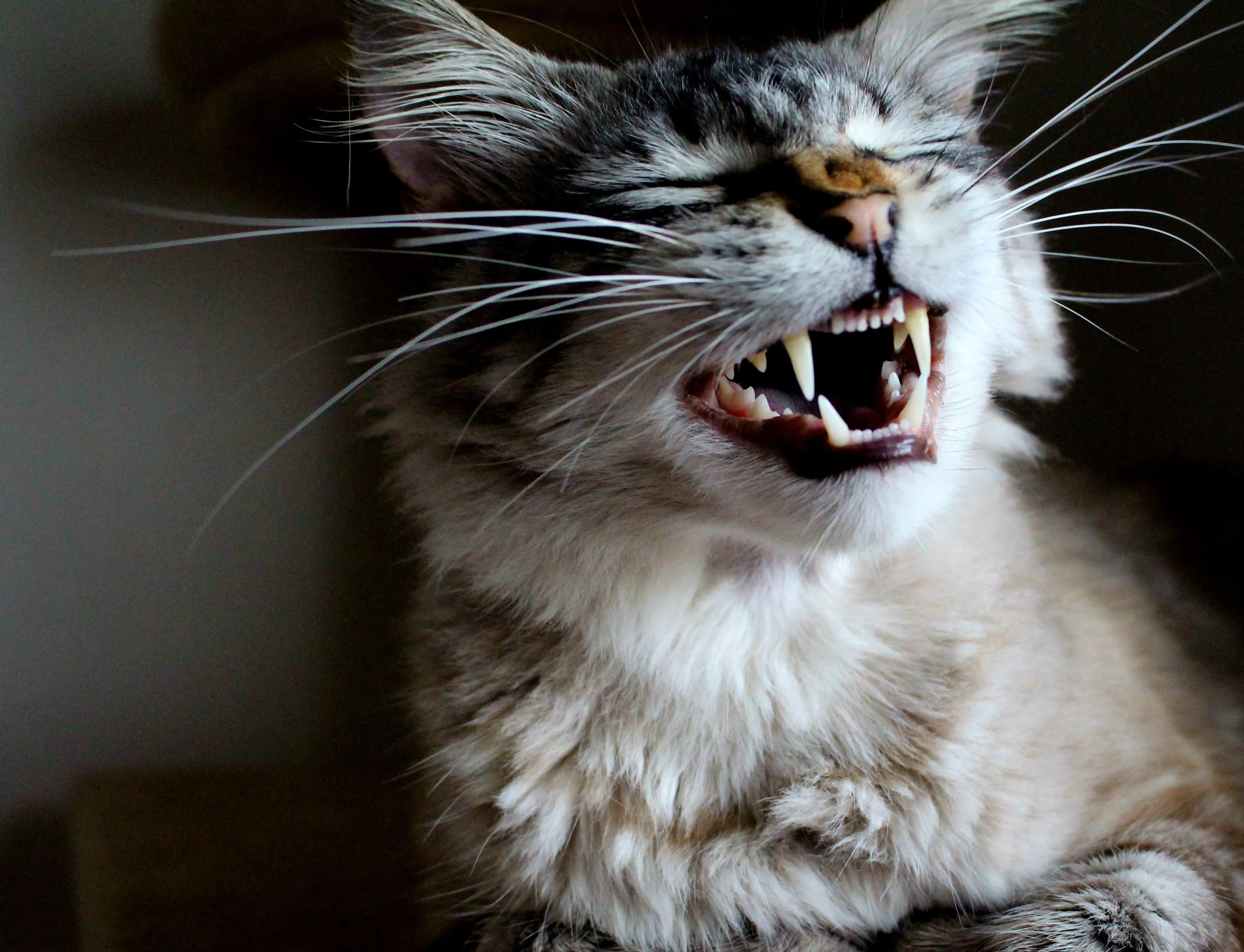
Somewhere between 50% and 90% of cats older than four already have some form of dental disease [1]. Not "might get it someday." Already have it. And it starts early — by age three, about 70% of cats are already affected [8].
Most owners never think about this. The cat eats, the breath smells a little, and nobody connects it to a veterinary bill down the road. I didn't either, honestly, until a vet pointed at my cat's red gumline and asked when I'd last brushed. The answer, embarrassingly, was never.
Here's what I learned: brushing your cat's teeth isn't a luxury or a way to show off as a great owner. It's the cheapest, easiest thing you can do to head off one of the most common diseases cats get — and the damage isn't just to their mouths. Let me walk you through the why, and then the how.
Do cats really get dental disease?
Short answer: yes, and it's not rare. It's near-universal as cats age.
Studies report that between 50% and 90% of cats older than four have some form of dental disease [1]. The American Veterinary Dental Society puts it even earlier: about 70% of cats are already affected by age three [8]. By three years old, most cats and dogs already have some degree of periodontal disease [8].
So if you've got an adult cat and you've never thought about its teeth, you're not an outlier — you're the norm. The bad news is the norm is exactly what leads to all those vet visits.
Why is dental disease more than a mouth problem?
This is the part that changed my mind. Dental disease in cats isn't just about bad breath or losing teeth. It's a whole-body issue.
Periodontal bacteria don't stay in the mouth. Left untreated, they enter the bloodstream and can damage vital organs like the heart, kidneys, and liver [2]. That's the link vets keep coming back to: an inflamed, infected mouth is a chronic source of bacteria that your cat's whole system has to keep fighting.
It also hurts. Dental disease causes real pain — the kind that makes a cat stop eating, which then causes a cascade of other problems [1]. A cat in mouth pain doesn't always show it clearly; cats hide pain well. By the time it's obvious, the problem is usually advanced.
What are the most common cat dental problems?
Three conditions make up most of what vets see [1]:
Gingivitis is inflammation of the gums, the earliest and most reversible stage. Red, swollen gumline is the giveaway.
Periodontitis is what gingivitis becomes when it's left alone — the inflammation moves deeper, attacking the structures that hold the teeth in place. This is where tooth loss and that systemic bacteria problem come in.
Tooth resorption is a different beast, and it's surprisingly common — estimated to affect 20% to 60% of cats, with close to three-quarters of cats over five affected [3]. In this condition, the body literally breaks down the cat's own teeth. It's painful, often very much so [3].
Each of these is a reason to look in your cat's mouth occasionally — and to prevent where you can. Tooth resorption in particular is hard to prevent entirely, but catching it early is everything.
Can cat food or treats replace brushing?
This is the question that lets owners off the hook, so let's be direct: no.
Some dental-formula foods and treats have a mild abrasive effect, and a few carry the Veterinary Oral Health Council (VOHC) seal. They're genuinely better than nothing. But none of them clean the gumline the way brushing does — and the gumline is where periodontal disease actually starts.
The most respected guidance is consistent here: brushing is the gold standard for home dental care, and the main thing it does is mechanically remove plaque before it hardens into tartar [4][5]. Food and treats don't brush along the gumline. They're an extra, not a replacement.
How do I brush my cat's teeth without a fight?
The secret isn't technique. It's pace. You don't start by brushing — you start by making your cat comfortable with the whole idea, then build up over days or weeks [4].
First, the tools. You need cat toothpaste — never human toothpaste, which contains ingredients like fluoride that can be toxic to cats, and cats can't spit; they swallow it [6]. Cat toothpaste comes in flavors cats actually like, like poultry or malt. Use a soft-bristled toothbrush or a finger brush made for cats [4].
Then, go slow:
- Let your cat taste the toothpaste. Put a little on your finger and let your cat lick it off. Make it a good experience.
- Touch the teeth and gums gently. Once your cat is fine with your finger near its mouth, rub the teeth and gumline with your finger.
- Introduce the brush. A finger brush is least intimidating; a soft toothbrush takes more getting used to.
- Brush in short sessions. Lift the lip, brush along the gumline in small circles, focusing on the back teeth where tartar builds up first. A minute is plenty [4].
- End on a good note. A treat, a scratch, something your cat likes. Always stop before your cat gets truly upset.
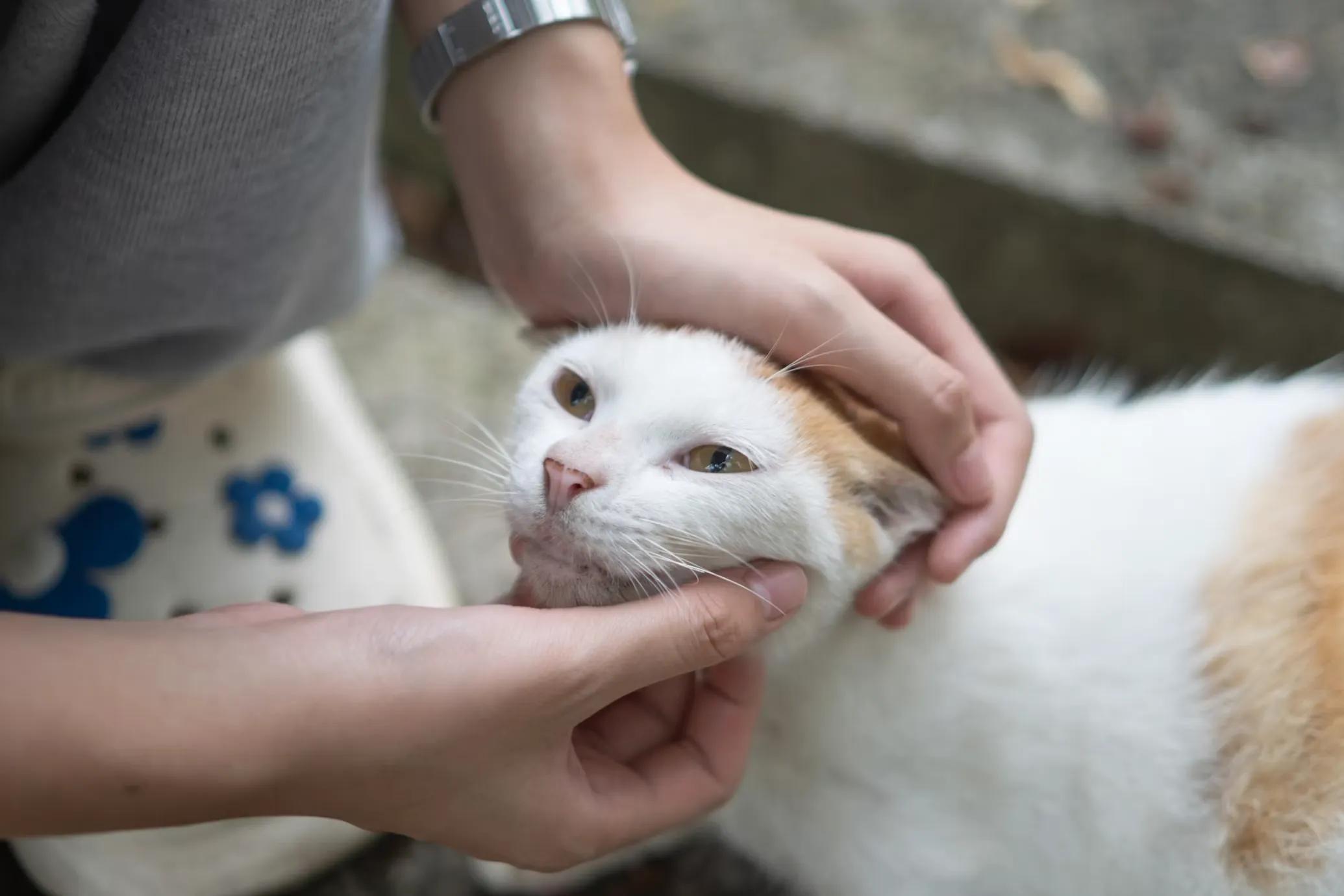
Aim for daily if you can, or at least a few times a week. Every brush removes plaque before it turns to tartar. Consistency matters far more than perfection [4][5]. My first few attempts looked like a wrestling match that the cat won most rounds. It gets easier — for both of you — once it stops being a surprise.
What if my cat absolutely won't let me brush?
Some cats genuinely won't tolerate it. That's real, and you're not failing. Mine will only let me brush half her mouth before she decides we're done — so I do that half, then finish the other side with a dental wipe. It's not perfect. It's better than nothing, and honest about what it is. The key is to layer other defenses and be realistic about what they do [2]:
- Dental wipes or pads. You wipe along the teeth and gumline — easier than a brush for many cats.
- VOHC-approved dental food and treats. They're not a replacement, but they help slow buildup.
- Water additives for dental health. Modest help for some cats.
- Regular vet checks. This is the important one. If you can't brush at home, your cat needs professional dental cleanings more often, because plaque will build up faster [7].
That last point matters: professional cleanings require anesthesia, and they run roughly $300 to $800, climbing to $1,000-$1,500 if extractions are needed [7]. A few minutes of brushing a week is dramatically cheaper than a professional cleaning every year or two — which is why prevention is worth the effort.
When should I take my cat to the vet?
Home care prevents problems. It doesn't fix ones that are already there. So know the signs that mean it's time for a professional look [2]:
- Persistent bad breath that doesn't improve. It's often the first signal of dental disease [2].
- Red or swollen gums, or gums that bleed.
- Drooling or pawing at the mouth.
- Difficulty eating, dropping food, or eating less than usual.
- Loose or missing teeth, or visible tartar build-up.
- Obvious pain around the mouth.
If you see these, don't wait for home brushing to fix them — once tartar has hardened and disease has set in, brushing won't reverse it. That's a vet visit, where a dental exam, X-rays, and a cleaning under anesthesia can tell you what's really going on [7]. And if your cat suddenly stops eating or shows severe mouth pain, that's more urgent — get it checked promptly.
The takeaway
Here's the one-line version: brushing your cat's teeth is the cheapest, most effective thing you can do against one of the most common cat diseases — and the damage isn't just to the mouth.
By age three, most cats have some dental disease. Left alone, it damages more than teeth — it hits the heart, kidneys, and liver. Brushing with cat toothpaste removes plaque at the gumline before it becomes a problem, and it's dramatically cheaper than the $300-$800 professional cleaning that becomes necessary without it.
Start slow. Use cat toothpaste, never human. Brush a little, end on a good note. And look in your cat's mouth once in a while — the first sign of trouble is usually the one you catch early enough to prevent the rest.
Furpick.app is a participant in the Amazon Services LLC Associates Program and other affiliate programs. We may earn from qualifying purchases. Content from Amazon and other retailers is provided 'as is' and subject to change. All trademarks are the property of their respective owners.