Cat Grooming Tools, Decoded: What to Buy, What to Skip, and How to Avoid Paying the 'Shiny Object' Tax (From $3 to $499)
1. Cold water first: this is a $158 billion industry
Let's start with why every brand, every influencer, and every "curated grooming box" is pushing so hard.
According to the AVMA's 2025 U.S. Pet Ownership Sourcebook, Americans own about 76.3 million pet cats, spread across 43.1 million households — that's 32.6% of all US households [1]. The average cat-owning household has about 1.8 cats. Meanwhile, the American Pet Products Association (APPA) puts the total US pet industry at $158 billion in 2025, with $165 billion expected in 2026 [2].
Here's the part that matters for your wallet: the AVMA's breakdown for a cat-only household comes to roughly $653 per household per year — about $310 on food, $253 on veterinary care, $50 on toys, and $18 on grooming supplies [1]. I'll let you sit with that for a second.
Eighteen dollars a year on grooming. That's the number the average cat household actually spends. And yet the pet aisle is full of $35 deshedding rakes, $499 dryer boxes, and supplements that cost more than a month of good food.
Let me be clear: I'm not saying grooming money is bad money. I'm saying that when an industry is that big, the marketing is that aggressive — and the marketing targets you specifically: a new-ish cat owner who loves their cat and is willing to spend. I've been that person. I've bought the stuff. I want to show you how to tell the difference between a tool and a toy.
Here's one more number to keep in your back pocket: about 17% of people over age 6 in the US test positive for cat allergens on skin-prick testing [11]. I'm bringing this up for a reason — a lot of "grooming" purchases are secretly motivated by allergies. People buy deshedders, wipes, special vacuums, all hoping to reduce allergens. That's a legitimate goal, and daily brushing genuinely helps reduce loose hair and dander in your home. But the fix is a $10 comb and a habit, not a $150 "allergen-control" gadget.
So before we talk about which gear to buy, let's talk about the one piece of gear that actually earns its keep.

Match the comb to the coat, not the price tag.
2. Choosing a comb: match the coat, not the price tag
The comb is the only genuinely essential grooming tool — and it's also the most confusing thing in the pet aisle, because there are about forty different types with names that all sound the same.
Here's the secret: they mostly break down into just a few real categories [3][4][7].
| Tool | What it does | Best for | Typical price (USD) |
|---|---|---|---|
| Slicker brush (pin brush) | Removes loose undercoat and small tangles, lifts and fluffs the coat | All cats; essential for longhairs | Basic: $8–$21 (sale prices $7–13). Professional (e.g., Chris Christensen): $33–$48 [7][12] |
| Wide-tooth / flea comb | Detangles, lifts dead hair, most versatile day-to-day tool | All cats; longhairs should own one for sure | $3.37–$8.49 [7] |
| Undercoat rake / deshedding tool | Pulls out loose undercoat during seasonal sheds | Heavy shedders; use 1–2× a week in shed season, not daily | $25–$35 for the category standard (FURminator) [8] |
| Dematting comb | Cuts through actual mats | Longhaired cats | ~$6–$15 for a decent one [7] |
| Silicone grooming glove | Gentle massage + picks up surface hair | Shorthairs; bonus: most cats love it | $7–$13 [7] |
Notice something? The most useful tools are also the cheapest. A wide-tooth comb for under nine dollars. A slicker brush for $8–$21. You can build a genuinely complete shorthair kit for under $25.
And the professional slicker, the one that costs $33–$48? It's a real upgrade in finish quality and feel — but it's a luxury, not a requirement. If you've got a $40 brush budget and a cat who hates being brushed, spend the extra money on a higher-quality brush that's easier to pass through the coat and a good treat schedule, not on a third comb you'll lose under the couch.
Two things worth knowing before you buy any comb:
First, expensive ≠ better for your cat's coat. The $25–$35 deshedding rake is a genuinely good tool — but even the brand's own instructions say to use it 1–2 times a week during shedding season [8]. Overuse can stress hair follicles and thin the coat over time. It's a seasonal tool, not an everyday one. Don't let the marketing make you feel like you need to use it daily.
Second, the wrong comb can do real damage. Overuse of a pin brush can break hair. Overuse of a rake can thin the coat [3]. A tool used correctly is a helper; used incorrectly, it's a small machine for hair loss. Which brings me to how to choose — and it really is about the coat, not the price:
- Shorthair (British Shorthair, American Shorthair, Siamese, and so on): a soft slicker or a silicone glove plus a wide-tooth comb. Done. Under $25.
- Longhair (Persian, Ragdoll, Maine Coon): a fine-tooth comb with long pins that can reach down to the undercoat, plus a dematting comb for the occasional knot. Prioritize pin length over brand.
- Heavy shedder: add an undercoat rake, but keep it to shed season, once or twice a week, max.
And here's the payoff that makes all of this worth it: regular brushing intercepts loose hair before your cat can swallow it during grooming [5][10]. A $10 comb and five minutes a day. That one habit removes the majority of the hair that would otherwise wind up in your cat's stomach — and that single habit is worth more than every other grooming product in this article combined.
How often should you actually brush?
Now that you own the right comb, here's the routine that makes it count. Grooming frequency should track coat type, not marketing:
| Coat type | Suggested frequency |
|---|---|
| Shorthair | A few minutes, 2–3× per week |
| Medium / longhair | Daily, or every other day at minimum |
| Shedding season (any coat) | Daily brushing helps, plus the rake 1–2×/week |
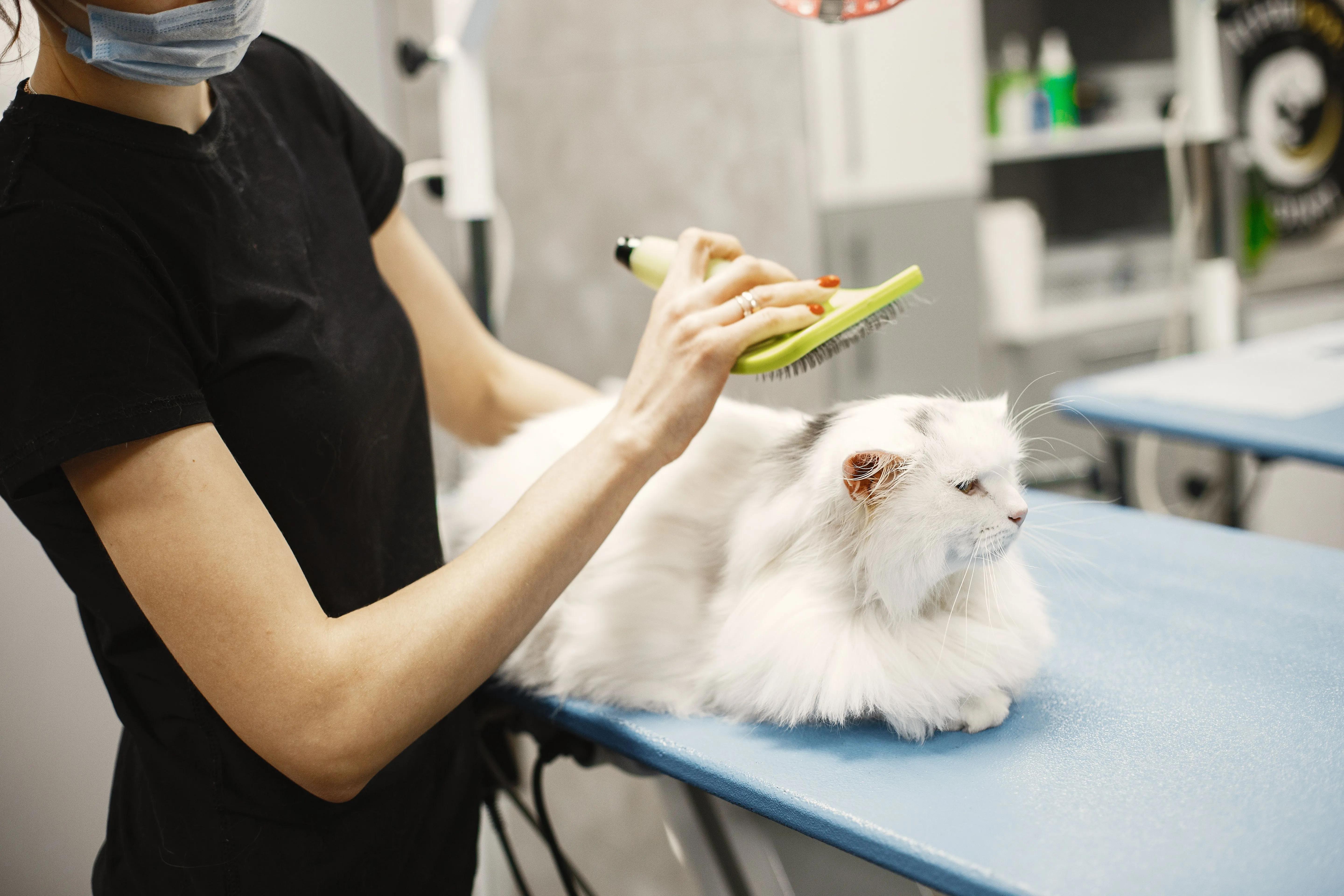
A few technique notes that cost nothing but change everything: brush in the direction of hair growth first, then against it in short strokes to lift dead undercoat; work in layers on a longhair, lifting sections with one hand while brushing with the other; and always end on a positive note — a treat, a chin scratch, a few minutes of play. The goal is a cat who tolerates — maybe even enjoys — the five minutes, because that's the only way a routine survives past week two. If your cat strongly resists, don't force a full session; three short sessions beat one battle. And this is the part people skip: check the comb's teeth for sharp edges or bent pins — a burred comb is a damaged coat and a resentful cat, no matter how much it cost.
3. The "smart-tax" purchases you can safely skip
Now for the part you probably came here for: the stuff you can confidently leave on the shelf.
3.1 "Coat explosion" powders and fur-growth supplements
This is the biggest marketing hot zone in cat grooming, and the pitch always sounds the same: feed this and your cat's coat will explode into a show-winning mane.
Here's the uncomfortable truth: coat quantity is largely decided by genetics. Nutrition can improve condition, but no powder changes the DNA your cat inherited. Your cat is a carnivore, and it does need high-quality animal protein — and yes, biotin (vitamin B7) is genuinely linked to skin and coat health, and you can find it in egg yolk and liver. But here's the catch: if you're feeding a complete, balanced food, your cat already gets these basics. The "coat explosion" powders, meanwhile, are mostly eggshell powder, lecithin, and vitamins — with effects that are, charitably, overstated.
Put it this way: your cat's coat volume is set by its parentage. No amount of powder changes who dad was.
I'll tell you about my own near-miss. First year with my cat, I was one influencer comment section away from buying a $40 jar of fur-growth powder. Then I did the math: $40 would buy me about three weeks of good wet food. I didn't buy the powder. My cat's coat didn't lose a single hair.
Here's what's actually interesting about the US market: there isn't much of a "coat explosion powder" category the way there is elsewhere — the closest equivalents are salmon oil and skin-and-coat supplements, typically running $20–$25 for a bottle (think NaturVet Salmon Oil around $20.97 or Native Pet around $24.99) [7]. Those at least have a plausible mechanism — omega-3 fatty acids genuinely support skin and coat condition. Are they necessary on a balanced diet? Usually not. But if you're going to spend money on coat supplements in the US, a fish oil is the one with a defensible rationale, not a mystery powder.
3.2 Hairball gel
Let me be fair first: hairball remedies aren't useless. They work by lubricating and softening the hairballs that form in the stomach — that's a real mechanism [10].
But there's a persistent, large body of cat owners arguing that "brushing + egg yolk + a little grass" is enough, and they have a point [10]. Here's my balanced take:
If you're brushing daily — remember the principle from earlier — most hair never even reaches the stomach. That makes hairball gel a low priority. A healthy cat does sometimes produce a hairball; that's normal life. But if your cat is throwing up hairballs every week, the first move is to check for skin conditions and brush more, not to order more product. (For reference, vomiting a hairball every 1–2 weeks is considered within normal range per Cornell; more frequent than that is worth a vet conversation [5].) And if you do want a gel in the drawer for emergencies, you don't need the fancy one — the price range runs from about $5.65 for the basic Hartz tube to $15.49 for a Laxatone-style product, and the mechanism is essentially the same [7].
3.3 The things your cat doesn't even need
Then there's a whole category that doesn't even pretend to be for your cat's health — the "spa day."
Most healthy adult cats don't need to be bathed. At all. Brushing is dramatically higher priority than bathing for coat health [3][9]. And yet there's a thriving business selling "deep cleaning spa packages" for healthy shorthairs — an animal that doesn't go outside, doesn't have skin disease, and would frankly rather be anywhere else. Weekly bath schedules for a healthy indoor cat are mostly a way to stress your cat out and build a new anxiety trigger for zero coat-health benefit.
I'm not anti-spa. I'm anti-"this spa package is a need." It isn't. Your cat needs brushing, good food, and clean water. Everything else is a want — and it's fine to buy wants, as long as you know that's what you're doing.
4. The purchases that are actually worth it
Gear you can skip. But these three — these are the places where your money is doing real work.
4.1 Cat-specific shampoo (when your cat actually needs a bath)
First, the "when." Cats genuinely need bathing in a handful of situations: they've gotten into something chemical or otherwise un-cleanable, they're in the middle of a medicated bath treatment, a longhair's coat is greasy and matting, or you own a hairless cat whose skin produces excess oil [9]. In those cases, shampoo isn't optional.
Why not just use yours? Because skin pH doesn't match. Studies of cat skin pH (Szczepanik et al., 2011) put it around 6.39–6.64 depending on body region, with males slightly more alkaline at about 6.94 versus 6.54 in females [6]. Human products skew more acidic — many human shampoos sit around 5.5. Use a human product on a cat and you can disrupt the skin barrier, leading to dryness, dandruff, and hair loss. I've seen real owners post the aftermath: a cat bathed in baby shampoo, followed by days of worrying shedding. Don't learn this one the hard way.
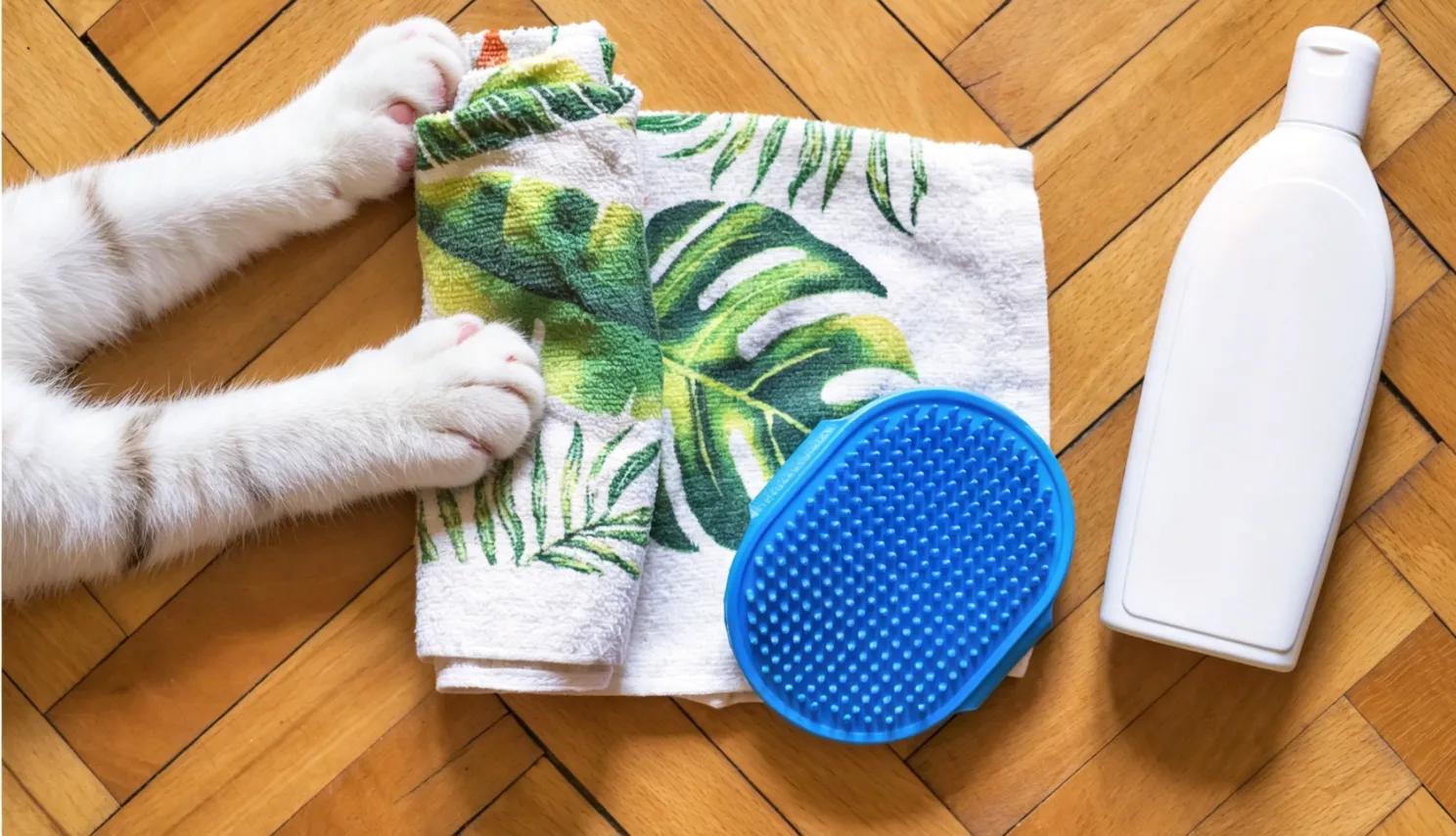
The good news: cat shampoo is not an expensive category. Expect to pay roughly $7–$19 for a proper cat-specific product — from about $7 for a small Vet's Best shampoo up through TropiClean around $14–$18 and Earthbath in the high teens [7]. And don't stockpile. A typical indoor cat gets bathed maybe once or twice a year. One bottle can last you years — literally check the expiration date before you buy a second.
4.2 A pet dryer or drying box (only if you're committed to bathing at home)
This is the most honest experience thread I've seen on the grooming subreddits: an owner describes bathing a longhair, how the blow-dry turned the entire room into a snow globe, and how they finally bought a drying box — which the owner says cut their post-bath workload by roughly 80%.
That anecdote is real, and I believe it. But think about your actual usage before you spend.
Drying boxes run from roughly $87–$160 for entry-level to $185–$212 for mid-range and $359–$499 for the smart high-end ones; high-velocity dryers sit around $187–$237 [7]. That's a meaningful chunk of money for something you'll use a handful of times a year. The math only works if you're committed to bathing at home long-term — say, you own a longhair that needs regular medicated baths, or a hairless cat.
If you bathe once a year, skip it. A household hair dryer on the low/cool setting, held 20–30 cm (8–12 inches) from the skin, brushing and drying layer by layer, is genuinely sufficient [9]. Your bathroom will look like it snowed, but your wallet won't hurt.
4.3 Hairless-cat care (if that's what you own)
Sphynx and other hairless cats flip the grooming logic: no brushing, but skin that produces a lot of oil. They need regular wiping down or occasional baths with warm water, with extra attention to the folds — otherwise they're prone to folliculitis (skin infections in the creases) [9]. This is a breed-specific need. If you chose a hairless cat, this is the category where you should not pinch pennies.
5. The red/yellow/black list: check this before you hit checkout
Here's the screenshot-worthy table. Save it. Glance at it before you click "add to cart."
| Category | Item | My take |
|---|---|---|
| 🔴 Red — buy | Basic comb kit (slicker + wide-tooth comb) | $8–$21 handles daily care for most cats. Non-negotiable. |
| 🔴 Red — buy | Cat-specific shampoo | Mandatory when a bath is genuinely needed; never use human products. ~$7–$19. |
| 🔴 Red — buy | Pet dryer / drying box | Worth it only for long-term home bathers; otherwise a cool hair dryer 8–12" away is fine. $87–$499 depending on tier. |
| 🟡 Yellow — maybe | Brand-name deshedding rake (e.g., FURminator) | Great seasonal tool; 1–2× per week in shed season only. Budget $25–$35. |
| 🟡 Yellow — maybe | Fish-oil skin & coat supplement | Plausible mechanism (omega-3s), usually unnecessary on balanced food. $20–$25. |
| 🟡 Yellow — maybe | Hairball gel | Not useless, but far lower priority than daily brushing. $5.65–$15.49. |
| ⚫ Black — skip | "Coat explosion" / fur-growth powders | Genetics decide coat volume; effects overstated. Save your $40. |
| ⚫ Black — skip | "Spa packages" for healthy shorthairs | Your cat doesn't need a bath, let alone a weekly one. Brush first. |
| ⚫ Black — skip | Human shampoo for cats | Wrong pH, disrupted skin barrier, real shedding afterward. Just no. |
6. Bottom line: spend on method, not on gear
Here's the thing I want you to take away, and it's not "buy nothing" or "buy everything." It's this:
The best grooming investment is not a $40 brush or a $400 dryer. It's five minutes of daily brushing and a decent bag of food.
Start by picking one or two basic combs based on your cat's coat length. Build the brushing habit — five minutes a day, same time, treat after. Then take the money you didn't spend on the shiny stuff and point it at the two things that actually move the needle for your cat: the vet and the food bowl.
One more frame that helped me think about this clearly: grooming gear is a ladder, and most of us only need the bottom two rungs. The top of that ladder — professional slickers, $499 drying boxes, prescription-adjacent coat supplements — exists for breeders, show homes, and longhaired cats with real coat maintenance needs. It is not a reflection of what a normal indoor cat requires. Every rung you climb adds cost without adding a proportional amount of coat health, until you hit the niche situations (dematting machines, medicated baths, breed care) where a specialist tool genuinely earns its price. Spend where your cat is, not where the marketing ladder points.
One last honest note: I don't know your cat. Every cat is an individual — some genuinely hate being brushed, some shed like a machine, some have skin conditions that change the calculus. When in doubt, ask your vet. The $18 a year the average household spends on grooming is a clue: your cat needs less gear than the aisle wants you to believe.
Now go brush your cat. It's the best grooming product on the market, and it's already in your hands.
Notes on method: Market-size figures use the APPA convention ($158B, 2025) per the briefing's required sourcing. Ownership and per-household spending figures use the AVMA 2025 Sourcebook. Prices are approximate 2026 US retail ranges from public listings; your local price will differ. This piece is educational and never a substitute for veterinary advice.
Furpick.app is a participant in the Amazon Services LLC Associates Program and other affiliate programs. We may earn from qualifying purchases. Content from Amazon and other retailers is provided 'as is' and subject to change. All trademarks are the property of their respective owners.