5 Mistakes First-Time Cat Owners Make (and What to Do Instead)

Your New Cat Is Hiding. Now What?
You did it. You brought a cat home. You set up the bowl, bought the toys, and you're ready to be the best cat parent ever.
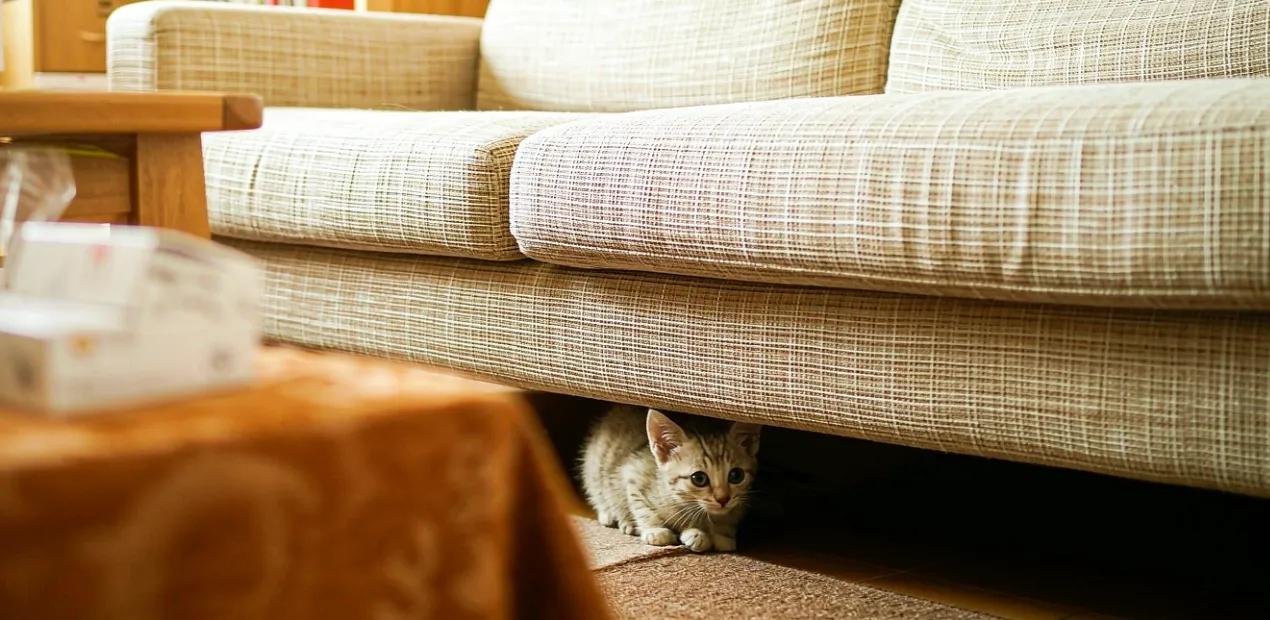
And then the cat vanished.
Under the bed. Behind the couch. In the back of a closet. No amount of calling or shaking a treat bag seems to matter.
Here's the uncomfortable truth: that moment is usually not the cat's fault. It's usually a sign of a mistake you made — or a mistake the internet told you to make. The good news is almost all of it is fixable. I made my first few cat-owning mistakes with a cat that forgave me. The internet doesn't always get advice right, either.
So here are the five mistakes I'd want someone to have warned me about, and what to do instead.
Mistake 1: Expecting the Cat to Be Instantly Affectionate
The biggest mistake isn't anything you do on day one. It's what you expect.
Most people picture this: they open the carrier, the cat bounds out, purrs, and curls up in their lap. That's a movie scene. It is not how cats work.
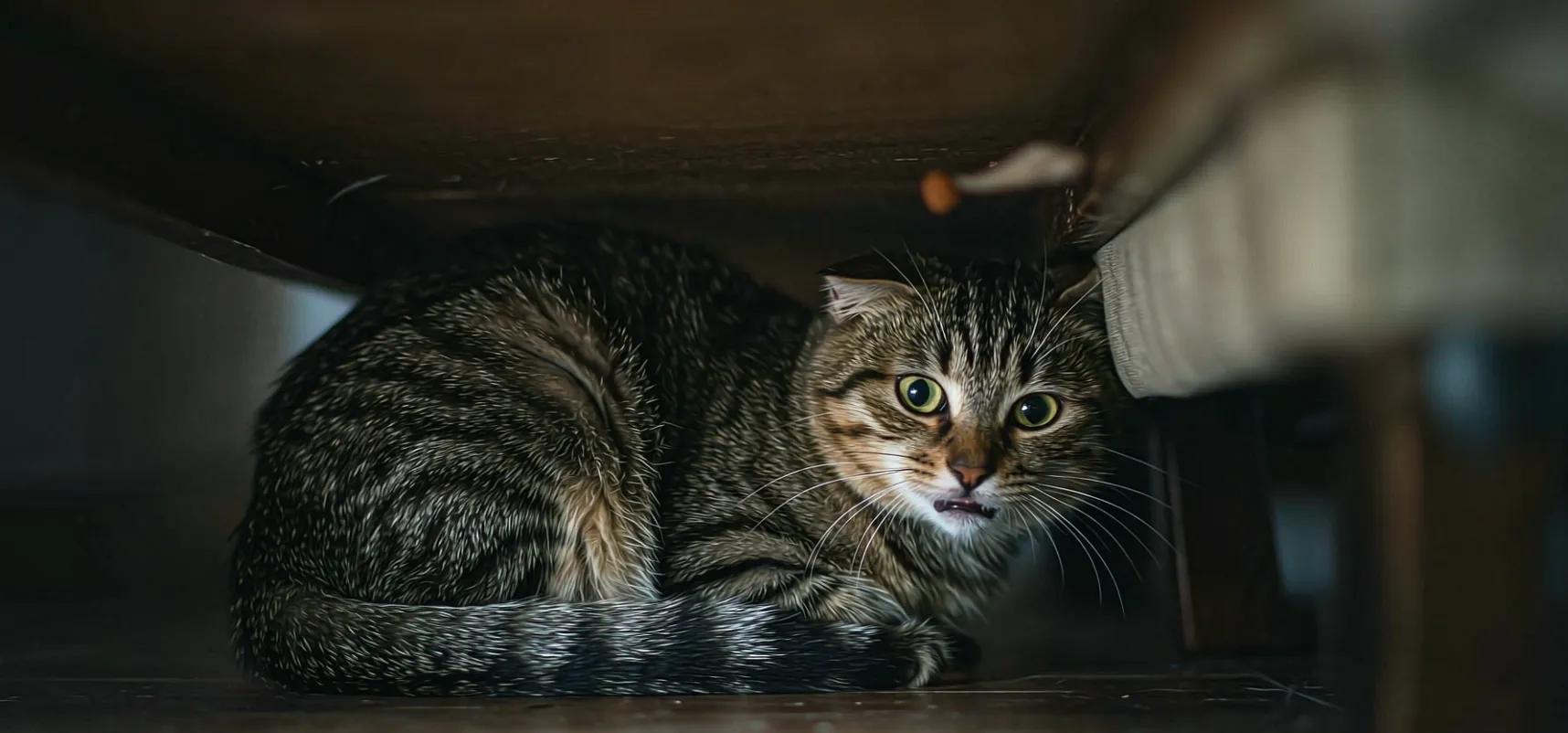
A cat in a new home is in a state of mild fear, even if it doesn't show it. Everything is unfamiliar — the smells, the sounds, the space. About 3 million cats enter U.S. shelters every year [1], and the ones that get adopted are coming out of a stressful environment into another completely unfamiliar one.
So drop the expectation. For the first day or two, don't chase, don't force cuddles, don't carry the cat around. Give it a small, quiet room with food, water, a litter box, and a place to hide [2]. Let affection happen on the cat's schedule, not yours.
What to do instead: Set up a "safe room" before the cat arrives. Sit quietly in the room without reaching for them. Let them approach you first. When they do, offer a hand for them to sniff, then a gentle chin scratch. Slow wins.
Mistake 2: Treating Stress Signals as "Bad Behavior"
Here's a scenario that breaks my heart every time I hear it: the cat is settling in, but a few days later it pees on the rug. The owner assumes it's revenge, or spite, or that the cat is "difficult." They scold the cat. And the problem gets worse.
Stop. That's not a bad cat. That's a stressed cat sending you a signal.
Inappropriate elimination — peeing or pooping outside the litter box — is one of the most common behavioral problems, and the Cornell Feline Health Center is clear: it can be a sign of a medical problem, and you should rule that out before assuming it's behavioral [5].
Hiding, reduced appetite, excessive sleeping, and avoiding people are also all normal adaptation behaviors in the first few days or week.
What to do instead: If the cat stops using the litter box, first make sure the box is clean, in a quiet spot, and not too close to the food [2]. Then — and this is the important part — consider a vet visit to rule out a medical cause [5]. Don't scold. Scolding a cat for a stress response just adds more stress.
Mistake 3: Guessing at Food and "Treating" Things Yourself
Cats have specific nutritional needs, and guessing is how people get it wrong.
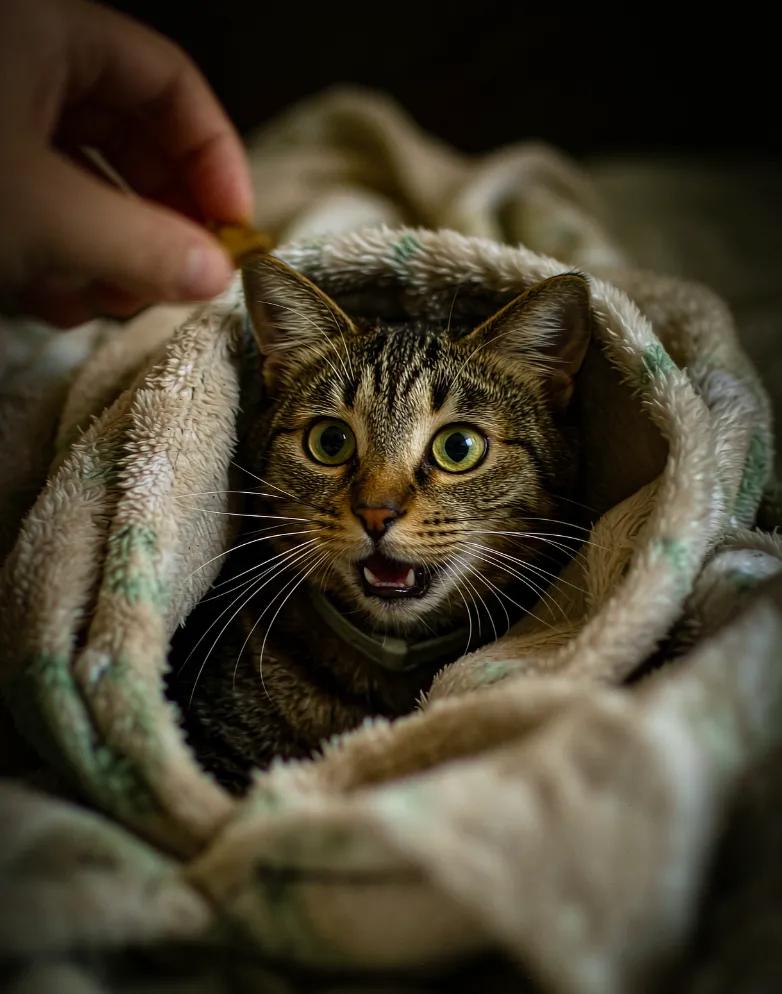
Food first. Kittens need a complete, balanced kitten food that includes taurine — an essential amino acid for heart and eye health [2]. And here's a number worth remembering: treats should be no more than 5–10% of a cat's total diet [2]. If treats are a big chunk of what your cat eats, that's not a balanced diet.
Second, and this one's important: don't play vet. It's tempting to reach for human medicine or home remedies when a cat looks off. Don't. The ASPCA warns against giving cats any medication without a vet's prescription [2]. Cats metabolize drugs very differently from humans and dogs, and something harmless to us can be dangerous to them.
What to do instead: Feed a balanced cat or kitten food with taurine, in age-appropriate amounts — kittens 8–12 weeks old typically eat 3–4 times a day, dropping to 2–3 meals as they get older [4]. For anything medical, call your vet. If you suspect poisoning, the ASPCA Animal Poison Control Center is available 24/7 at (888) 426-4435 [2].
Mistake 4: Skipping the Vaccine and Spay/Neuter Timeline
This one comes from good intentions. The cat seems fine, money is tight, and you think you'll "get to it later." Later is how preventable diseases happen.
The vaccine schedule is a series, not a single shot. In the U.S., kittens start core vaccines (FVRCP) around 6–8 weeks old, with boosters every 3–4 weeks until the final dose, no earlier than 16 weeks [3]. Rabies typically comes at 12–16 weeks, with a booster a year later [3]. A 6-month FVRCP booster is often recommended too [3]. These are scheduled by your vet based on age and lifestyle.
Spay/neuter is just as important, and it's not optional for most owners. The ASPCA recommends spaying or neutering before 5 months of age [2]. Spaying a female before her first heat reduces the risk of some reproductive cancers and has long-term health benefits [6]. For males, neutering reduces roaming, fighting, and spraying.
What to do instead: Book the first vet visit within the first week home, even if the cat seems fine. Write down the vaccine and spay/neuter timeline your vet gives you. Treat it like a schedule you can't skip — because skipping it has real costs.
Mistake 5: Cramming the Cat Into a Busy Household Too Fast
Maybe you have another cat. Maybe a dog. Maybe kids. The instinct is to introduce everyone right away so they can all "become friends." That's backwards.
Introducing a new cat to existing pets or a busy household too fast is a recipe for stress and conflict. Cats need to adjust to one new thing at a time — the new home — before they can handle more.
The ASPCA's guidance is consistent on this: new cats do best with a slow introduction, ideally starting in a separate room and meeting other animals gradually, under supervision [2].
What to do instead: Keep the new cat in their safe room for the first few days. Let other pets get used to the cat's smell under the door before any face-to-face meeting. Introduce pets with supervision, short sessions, and plenty of treats. Let the cat set the pace.
The Common Thread: Speed
Look at all five mistakes and you'll see the same thing running through them: speed. Expecting instant affection. Wanting the cat to act normal fast. Skipping the timeline because it takes time. Rushing introductions.
Easy to say, hard to do. The cat that changed how I think about all of this taught me the lesson by hiding for four days straight. Patience isn't a tip — it's the whole job. And no, you don't get a progress bar for it.
Here's the reframe that helps most new owners: you're not training the cat to live in your world at your pace. You're learning to meet them in theirs, at their pace. That shift — from "control" to "understanding" — is the whole game.
One-line takeaway: Almost every new-cat mistake comes from moving faster than the cat is ready for. Slow down, and the trust follows.
Furpick.app is a participant in the Amazon Services LLC Associates Program and other affiliate programs. We may earn from qualifying purchases. Content from Amazon and other retailers is provided 'as is' and subject to change. All trademarks are the property of their respective owners.