Why Your New Cat Hides (and How to Build Trust the Slow Way)
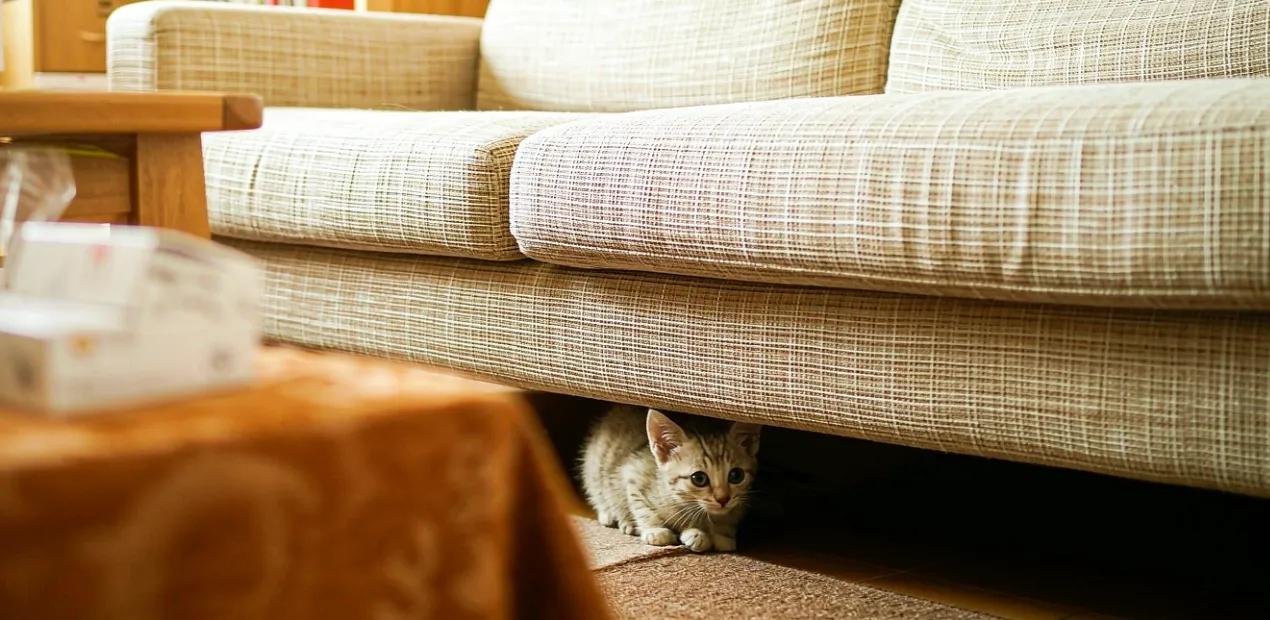
The Hiding Cat Is Not the Problem
You brought home a cat yesterday. You're thrilled. The cat is not thrilled.
It's under the bed. It came out at 3 a.m. to eat when no one was watching. It hisses if you get too close.
You're starting to wonder if you made a mistake. Maybe this cat is shy. Maybe it's traumatized. Maybe it doesn't like you.
Here's the reframe that will save you weeks of worry: the hiding is not a sign that anything is wrong with you or the cat. It's a sign that the cat is doing exactly what evolution designed it to do when everything is unfamiliar. I've been on the other side of this, staring under a bed at a cat that would not come out. The worry doesn't help. Knowing what's actually happening does.
Understanding that one thing changes how you handle the whole first month. Let me show you.
See It From the Cat's Point of View
Before we talk about what to do, we need to talk about what the cat is experiencing. Because you can't solve a problem you don't understand — and this is the one people get wrong more than anything else.
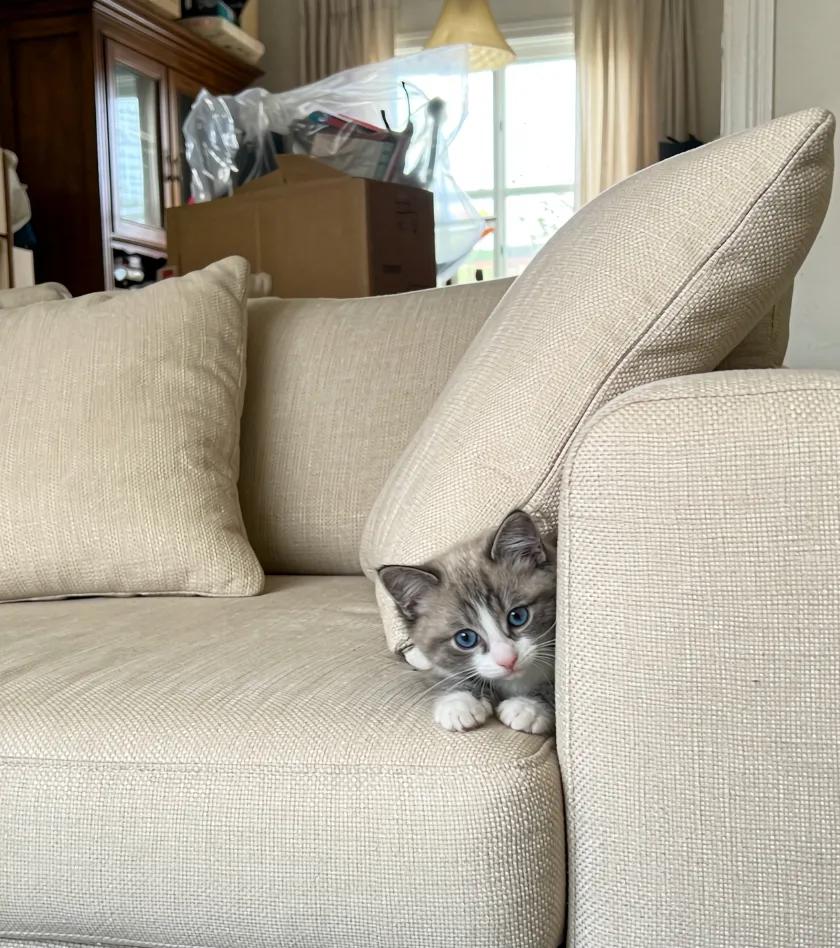
A cat is a territorial predator-prey animal. When everything is new — new smells, new sounds, new layout, new people — a cat has no way of knowing what's safe. Its instinct, correctly, is to find a small, enclosed, dark place and wait to see if danger appears.
That's not fear of you specifically. That's just being a cat in an unfamiliar place. The same instinct that makes a cat curl up in a cardboard box makes it hide under a bed in a new home.
Here's a useful number to keep in perspective: roughly 3 million cats enter U.S. shelters every year [1]. A shelter cat has been through a stressful, noisy, unpredictable environment. Then it comes home to another completely new world. The hiding is not just normal — it's the healthiest response the cat knows.
Set Up a Safe Room, Not a Showroom
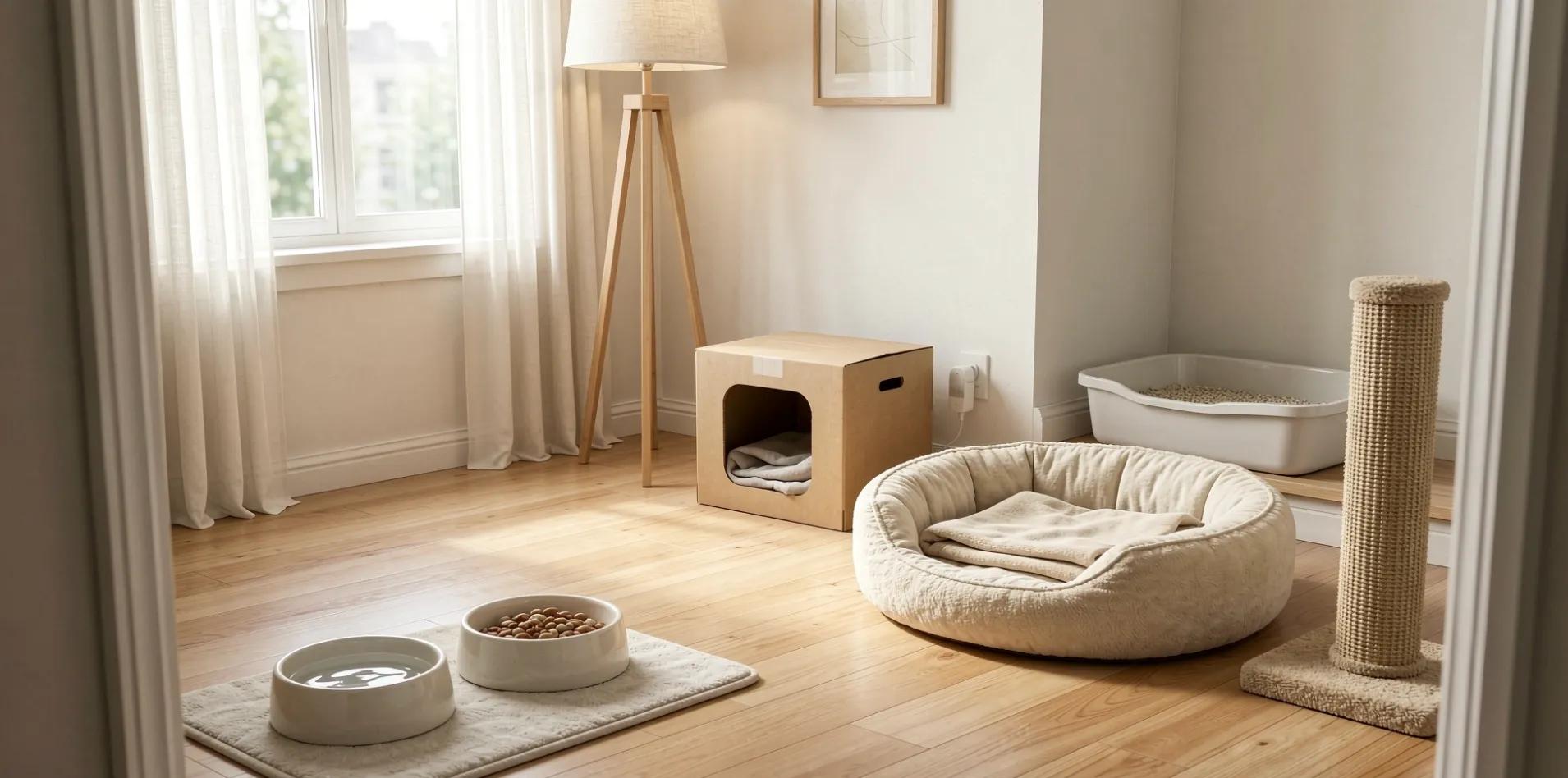
The single most effective thing you can do for a new cat is give it a small, quiet "safe room" to start in [2]. A bathroom, a spare bedroom, or a cleared-out closet works. In that room, before the cat arrives:
- Food and water bowls, in separate spots
- A litter box, away from the food
- A bed or a box with a soft towel
- A scratching post
- A few toys
Why small? Because a small space is controllable. A cat can feel "this corner is mine" in a bathroom. It can't feel that way about a whole apartment. Small, quiet, predictable — that's the recipe for helping a stressed cat relax.
The ASPCA keeps its own new-cat guidance refreshingly simple: food, water, a clean litter box, a place to hide, something to scratch, a few toys [2]. You don't need more. You need the basics, done right, in a space the cat can claim.
Let the Cat Set the Pace
This is the part that's hardest for people who love cats. You want to bond. You want to hold it and pet it and make it feel loved. Every instinct says reach out.
Don't. Not yet.
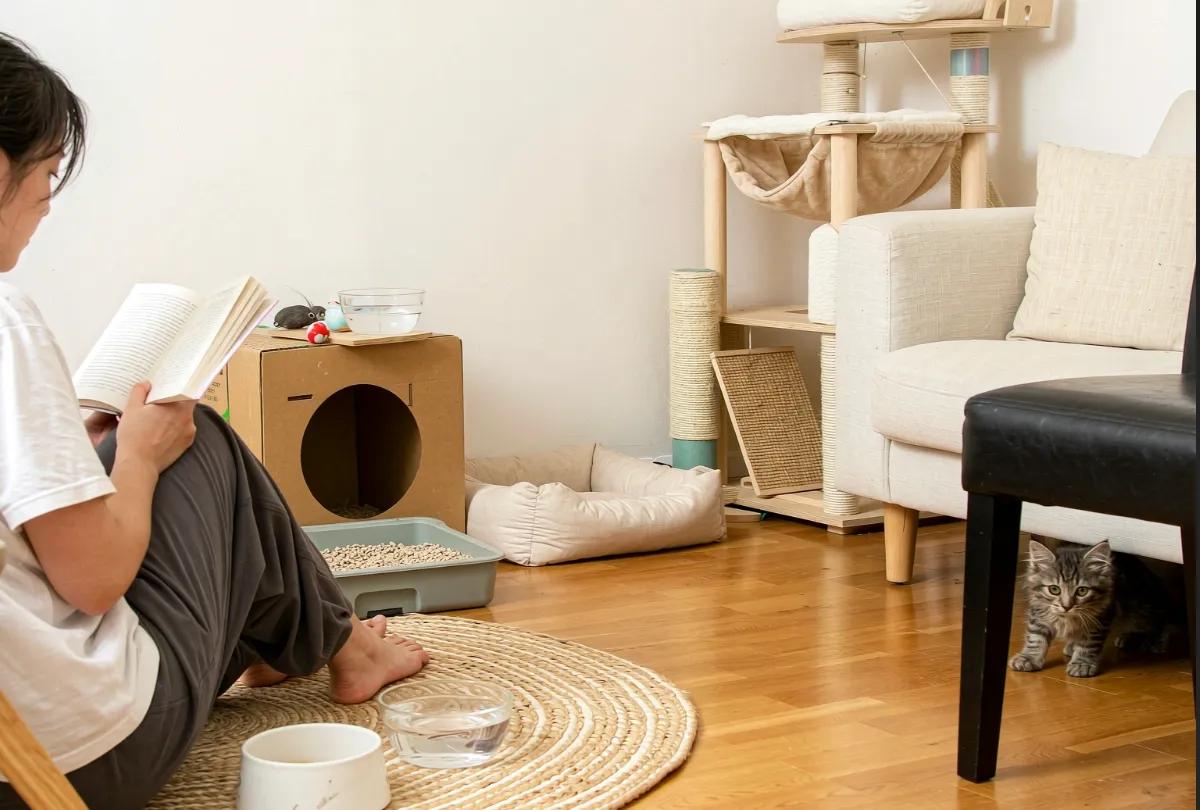
When you bring the carrier into the safe room, open it and step back. Let the cat come out when it's ready. If it stays in the carrier for hours, fine. If it bolts under the bed, fine. Your job in the first day or two is not to make the cat comfortable with you. It's to make the cat comfortable with the space.
Sit quietly in the room. Read a book, work on your laptop, scroll your phone. Let the cat watch you from a safe distance. Speak in a low, calm voice. Let it learn that your presence is safe, boring, and non-threatening.
The breakthrough moment, when it comes, is usually small. The cat approaches you. Or it eats while you're in the room. Or it lets you look at it without running. Each of those is a win — and honestly, in my experience, people almost always miss the first few wins because they were expecting a bigger, noisier prize. Celebrate quietly, and don't push further than it's ready for.
Use Food to Build Trust (Without Overfeeding)
Food is the most reliable trust-builder you have. A cat that associates you with good things to eat is a cat that's learning to trust you.
But — and this is where people mess it up — you build trust with the timing and pattern of food, not with an endless supply of treats.
Set a feeding schedule. Kittens 8–12 weeks old typically eat 3–4 times a day; by 6–12 months that drops to 2–3 meals a day [4]. Adult cats do well on twice a day. Feed a complete, balanced food with taurine [2]. And keep treats to no more than 5–10% of the total diet [2] — treats are for bonding and training, not for meals.
The pattern matters as much as the food. A predictable schedule tells the cat "this home is safe and stable." That predictability is more calming than a hundred treats. Write down the feeding times if you have other people in the house — trust me, "I just fed the cat" is a sentence every household argues about at least once.
Learn the Signals: Stress vs. Illness
Now the line you need to be able to draw. There's a difference between a cat that's adapting (stressed but healthy) and a cat that's genuinely unwell. Knowing the difference keeps you from both panicking too early and ignoring a real problem.
Normal adaptation signs (give it a week): hiding, shyness, a dip in appetite for a day or two, sleeping a lot, being cautious around new people, avoiding you at first.
Signs that warrant a vet call:
- Not eating for more than about a day, especially a kitten
- Vomiting or diarrhea lasting more than a day
- Lethargy that doesn't lift
- Difficulty breathing, or fast, labored breathing
- Straining to pee, or using the litter box less
- Any sudden behavioral change
For reference, a healthy cat's temperature is about 99.5–102.5°F, heart rate roughly 160–220 beats per minute, and breathing about 20–30 breaths per minute [5]. But you don't need to become a nurse — the simple signals above are the ones to act on. If you're ever unsure, that's what a vet call is for.
One specific signal new owners misread: peeing or pooping outside the litter box. It's tempting to read this as stress or spite. The Cornell Feline Health Center is blunt — it can be a sign of a medical problem, and that should be ruled out before you assume it's behavioral [3]. A stressed cat and a sick cat can look similar. A vet visit tells you which one you have.
Room to Roam, Slowly
Once the cat is eating, using the litter box, and letting you near it — that's the green light to expand. But do it gradually.
Open the safe room door and let the cat explore a little more of the house on its own. Don't follow it around. Don't pick it up and carry it to new rooms. Just let it roam, and give it time to retreat back to the safe room when it feels overwhelmed.
If you have other pets, this is where slow introduction matters most. The ASPCA and shelter guides are consistent: new cats do best meeting existing animals gradually, supervised, in short sessions [2]. Let them get used to each other's smell under the door before any face-to-face meeting.
Why Indoor Living Builds a Longer, Calmer Life
There's one decision that quietly shapes all of this: whether your cat lives indoors or goes outside. And it matters more than most people realize.
Indoor cats live significantly longer. Estimates put them at roughly 13–17 years (many live to 15–20+), while outdoor cats average only about half that [6]. The reasons aren't mysterious: cars, fights with other animals, predators, and disease. The ASPCA also points out that indoor living protects cats from fleas, ticks, and contagious diseases [2].
A calm, safe indoor home isn't just easier for you to bond with a cat in — it's the environment where cats are statistically most likely to live long, healthy, low-stress lives.
The Takeaway: Trust Is Earned at Cat Speed
So here's the whole thing in one paragraph. The hiding cat is not rejecting you. It's a cat doing what cats do. Your job isn't to force the relationship — it's to build a space so safe that the cat chooses to come to you.
Here's what actually happens when you stop trying to make it happen fast: the cat relaxes, the hiding shortens, the trust deepens. Not because you did something dramatic. Because you gave it time and predictability, and let it come to you.
One-line takeaway: A new cat's trust can't be rushed. Build a safe space, keep a steady routine, and let the cat come to you — that's the whole secret.
Furpick.app is a participant in the Amazon Services LLC Associates Program and other affiliate programs. We may earn from qualifying purchases. Content from Amazon and other retailers is provided 'as is' and subject to change. All trademarks are the property of their respective owners.