How to Train a Cat the Right Way: Understand Signals & Use Positive Reinforcement

Here's a scene you probably know. It's vet day, and your cat is wedged under the couch, hissing at the carrier. You've tried everything — pushing, bribing with tuna, maybe even the old "tilt the carrier and drop the cat in" move. It's a disaster. And somewhere in your head you hear the same tired line: "Cats just can't be trained."
The pet industry would love you to believe that. It sells you more toys, more treats, more "calming" gadgets, all to manage a cat you think is untrainable. And to be fair, there's a lot of bad training advice out there — most of it treats a cat like a small, stubborn dog.
But here's the truth, and it's backed by actual science: cats absolutely can be trained. You just have to do it their way — with positive reinforcement, not punishment, and only after you learn to read what they're telling you.
There are about 49 million cat-owning households in the US [1], and Americans spent $158 billion on their pets in 2024 [2]. That's a lot of people trying to figure this out. Most of them are doing it wrong — not because they don't love their cat, but because nobody taught them how a cat actually learns.
This guide is that missing lesson. Four parts: read the cat, understand why positive works, do the drills, and know when to stop training and see a vet.
Can You Actually Train a Cat? (Yes — Here's the Science)
Let me kill the myth first. Cats aren't untrainable. They're independent, sure. But they're also food-motivated, curious animals that respond to the same learning principles as every other species: reward a behavior and it happens more.
This isn't an opinion. A 2020 systematic review and meta-analysis of conditioned reinforcement — that's the fancy name for clicker training and similar methods — looked at 34 studies and found a large mean effect size (Tau-U 0.77) on behavior change [3]. In plain English: when you mark a correct behavior with a sound and follow it with a reward, cats (and other animals) reliably learn. Clicker training isn't a gimmick. It's a validated tool.
One honest caveat, though. Some research suggests that a direct primary reinforcer — just handing over a high-value treat the moment the behavior happens — can be just as effective as, or even more effective than, a clicker for some animals [4]. The clicker's job is to bridge the gap between the behavior and the reward. The principle — reward the behavior you want — is what matters, not the gadget.
So the first uncomfortable truth: your cat isn't broken. Your method might be. The fix isn't "be more dominant." It's "reward what you want, ignore what you don't."
I remember the week I switched from a squirt bottle to a clicker. Day one, my cat looked at me like I'd lost my mind. By day four, she was sitting on command for a bit of freeze-dried chicken. The clicker didn't make her a "good cat" — it finally gave her a reason to cooperate that didn't involve being scared of me.
Why Punishment Doesn't Work on Cats (the Science of Fear)
This is the part people resist, because punishment feels intuitive. Squirt the cat when it scratches the couch. Yell when it bites. It works for a second — the cat stops — so it must be working.
Except it isn't. What punishment actually teaches a cat is to fear you. Cornell's Feline Health Center is blunt about this: punishing a cat doesn't connect the punishment to the behavior in their mind; it just makes them scared of you, which can trigger more aggression [5]. And this matters more than you'd think. A study cited by Cornell found that 27% of cats surrendered to shelters for behavioral reasons were given up because of aggression [5].
Here's a number that reframes how you should think about rewards: 63% of cats prefer non-food rewards, according to research cited in the AAFP positive reinforcement toolkit [7]. For many cats, a good scratch session is the reward. The key is figuring out what your cat loves and using it consistently.
How to Read Your Cat's Signals Before You Train
Before you can train, you have to understand what your cat is telling you. Best Friends Animal Society breaks it down clearly [8]:
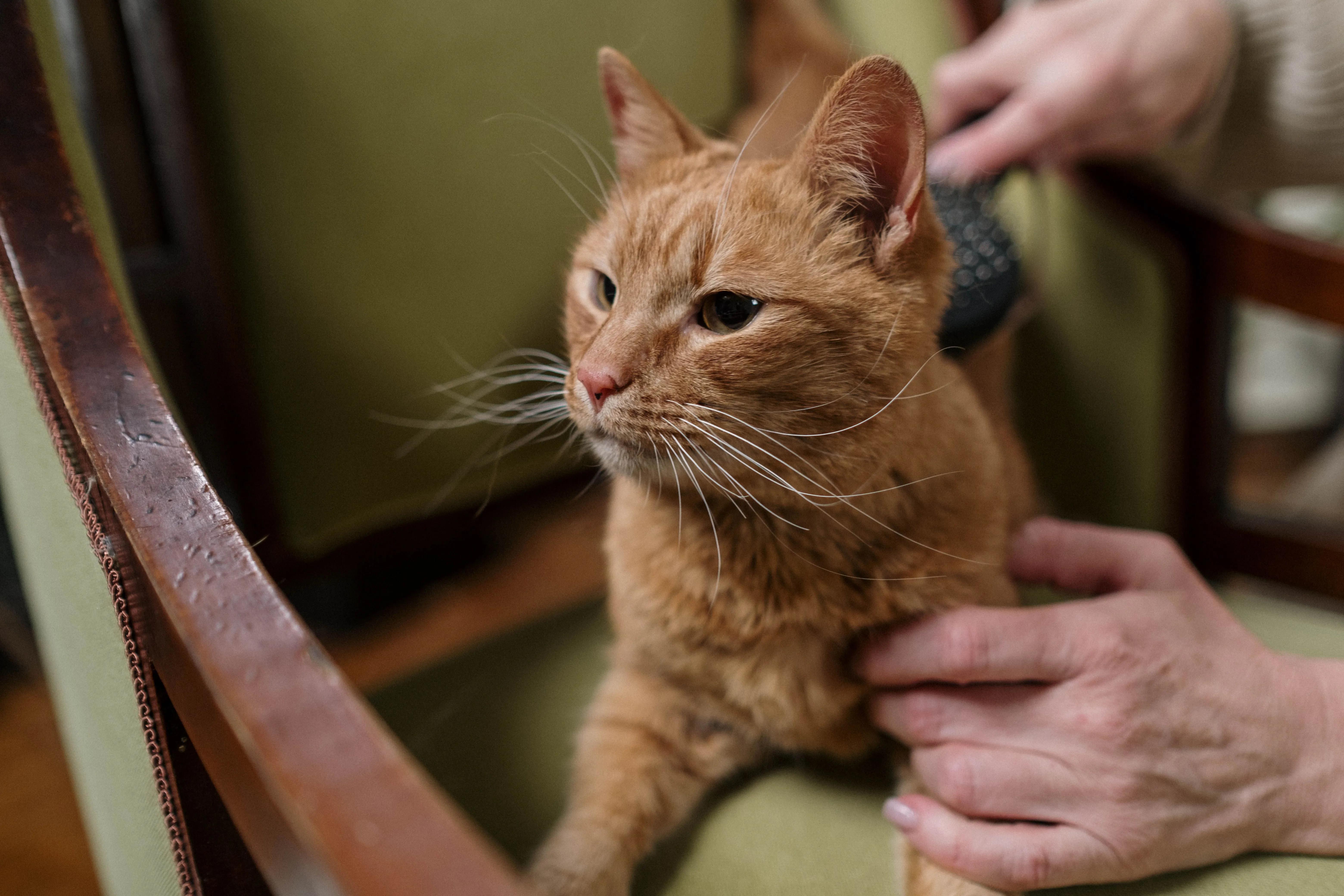
- Relaxed and calm: neutral ears, soft eyes, slow blinking.
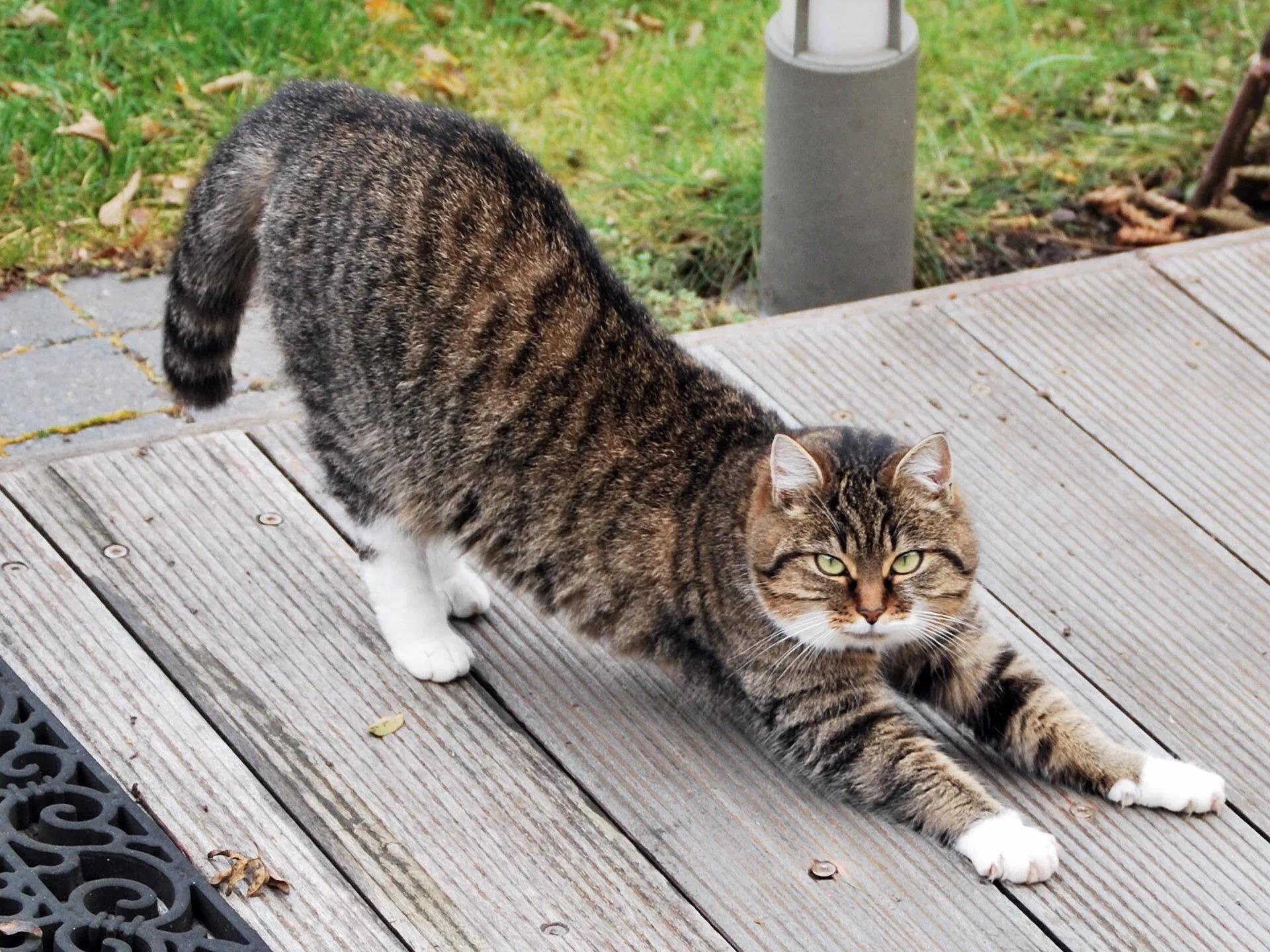
- Fear or anxiety: flattened ears (the "airplane ears"), dilated pupils, low tail, crouched posture, hissing.
- Sick or in pain: head low, eyes half-closed, whiskers drooping, third eyelid visible, hunched into a tight ball.
Here's the key insight: a behavior only makes sense in context. Don't read one signal in isolation — look at the whole cat and the situation.
The 5 Positive Training Tools Every Owner Should Know
The AAFP's positive reinforcement toolkit lays out five core tools you can mix and match [7]:
- Conditioned reinforcers (clicker or verbal marker) — mark the exact moment, then reward.
- Capturing — reward a behavior your cat does naturally.
- Luring — use a treat to guide a behavior.
- Targeting — teach your cat to touch a target, then move it anywhere.
- Shaping — break a complex behavior into tiny rewarded steps.
None of this requires dominance or force. It requires timing, consistency, and knowing your cat's best reward.
4 Positive Training Drills You Can Start Today
Drill 1: The Carrier
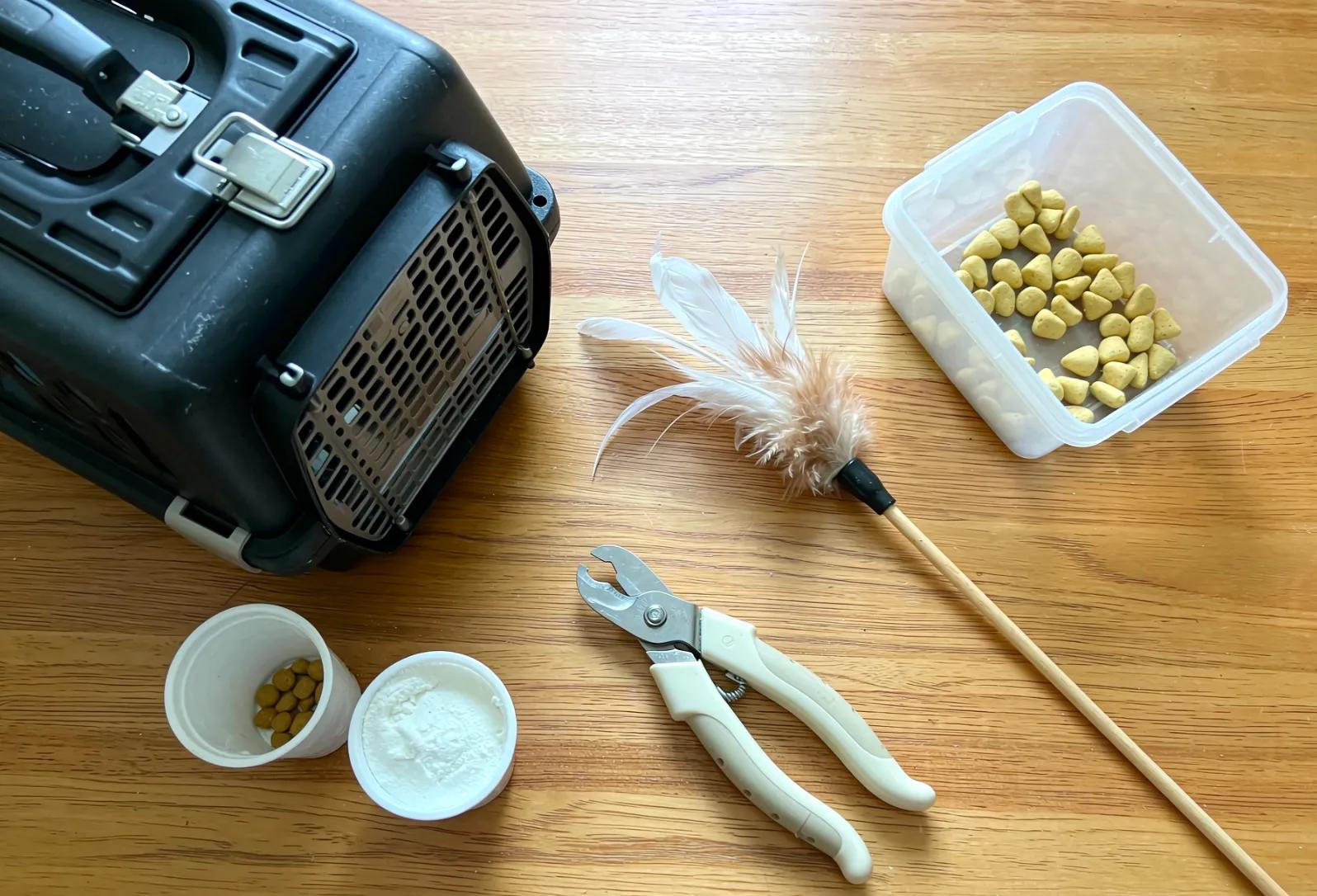
Fix the carrier by making it a place your cat wants to be: leave it out with a blanket, drop treats in it, use targeting to guide your cat in, build door tolerance. Over weeks, your cat walks in on its own [9].

Drill 2: Nail Trims
Build tolerance slowly: touch the paw, expose a claw, introduce the clippers, cut one nail, then one more each session. Go at your cat's pace [10].
Drill 3: Coming When Called
Pair the cue with food, reward the arrival, practice at distance. Never call your cat for something unpleasant [11].
Drill 4: Stopping the Biting and Scratching
Never use your hands as toys. End the game when it bites, redirect with a wand toy, give daily structured play. The mantra from Pam Johnson-Bennett: "Hands are for petting, not for playing" [12].

When Training Isn't the Answer: See the Vet
The #1 rule from every veterinary source: rule out medical causes first. A cat that suddenly pees outside the box might have a urinary tract issue [6]. A cat that's suddenly aggressive might be in pain [5].
Red flags that mean "call the vet": sudden behavior change, elimination outside the box, signs of pain, or not eating alongside behavior changes.
The Takeaway
Your cat isn't untrainable. It never was. What was missing is the approach — reading its signals, rewarding what you want, and leaving punishment out of it.
Understand the cat first, then train. Reward what you want, and let the rest fade.
Furpick.app is a participant in the Amazon Services LLC Associates Program and other affiliate programs. We may earn from qualifying purchases. Content from Amazon and other retailers is provided 'as is' and subject to change. All trademarks are the property of their respective owners.